
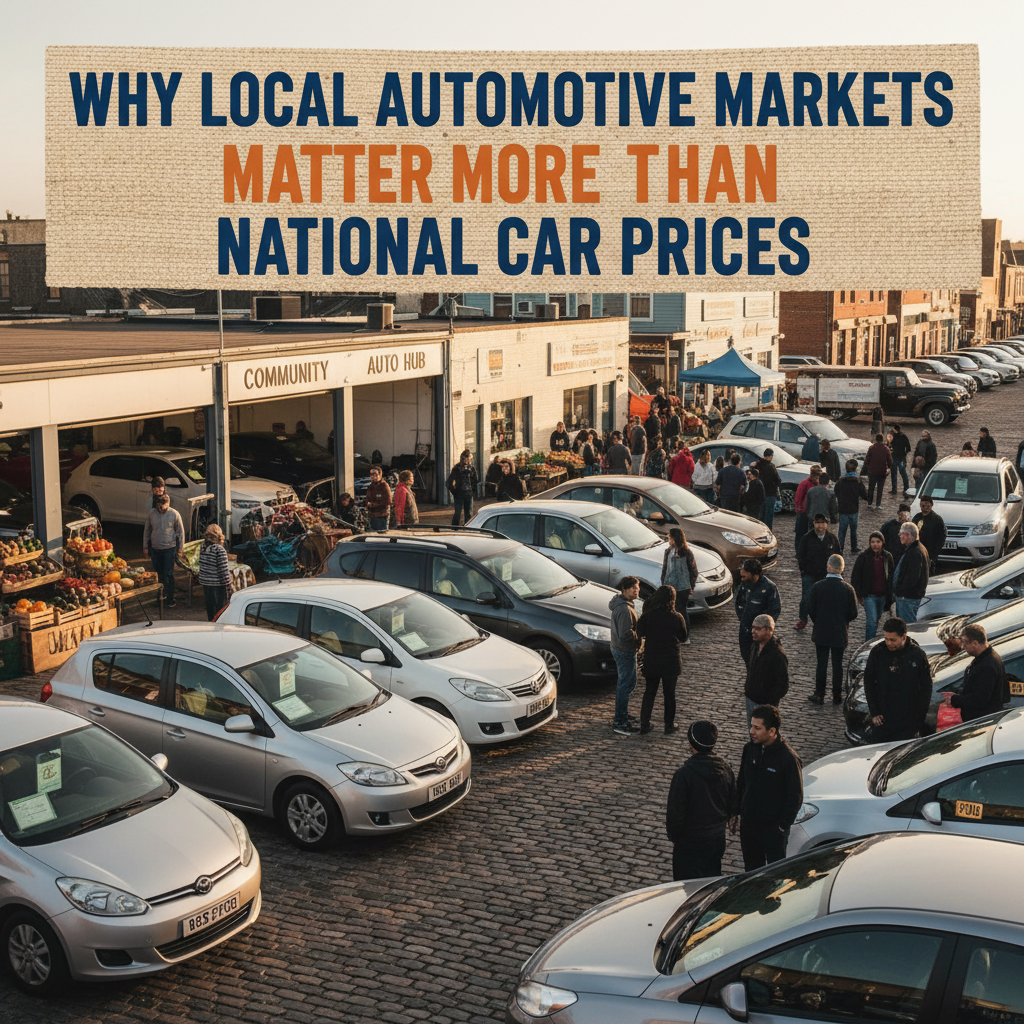
Why Local Automotive Markets Matter More Than National Car Prices
When shopping for a vehicle, most people start their journey by browsing national headlines and macro-economic reports. We hear nightly news broadcasts declare whether car prices are soaring or plummeting on a federal scale. However, relying purely on broad averages can lead to costly mistakes. In reality, buying a vehicle is a hyper-local experience. Understanding why local automotive markets matter more than national car prices is the single best way to secure a fantastic deal and find the exact vehicle that fits your lifestyle.


The Illusion of National Averages
National car price indexes aggregate data from thousands of distinct regions, smoothing out extreme highs and lows into a single, digestible number. While this data is useful for economists, it has very little bearing on what you will actually pay at a dealership down the street. A massive drop in truck prices across the rust belt, for instance, won’t lower the cost of a commuter hatchback in a dense coastal metropolis. Regional supply chains, localized consumer demand, and state-specific regulations dictate actual transaction prices far more effectively than any federal guideline.
Supply and Demand at the Zip Code Level
At its core, automotive pricing comes down to basic economics: supply versus demand. A dealership in a snowy mountainous region might see an astronomical surge in demand for all-wheel-drive crossovers right before winter, driving prices upward. Meanwhile, dealerships hundreds of miles south might struggle to clear inventory on those exact same models, leading to steep discounts. By ignoring national trends and focusing strictly on your local inventory ecosystem, you can pinpoint where excess supply creates buyer leverage.

Hidden Factors Shaping Regional Prices
Several localized variables actively shape what you pay, completely independent of national trends. Recognizing these elements will help you time your purchase correctly and choose the right location to shop.

- Regional Climate Needs: Convertibles command higher prices in sunny southern states, while trucks and utility vehicles dominate rural midwestern lots.
- State and Local Taxes: Sales tax rates, registration fees, and mandatory emissions testing add distinct layers to the total cost of ownership.
- Dealer Group Density: Highly competitive metropolitan areas with numerous competing franchise groups often feature aggressive discounting that rural monopolies simply cannot match.
Transportation Costs and Trade-In Dynamics
Another reason local markets reign supreme involves logistics and trade-ins. If you decide to source a vehicle from a distant state based on a tempting national advertisement, shipping fees and travel expenses can instantly erase any perceived savings. Furthermore, your trade-in vehicle’s value is heavily dictated by local tastes. A fuel-efficient sedan might fetch a premium trade-in price in a crowded city with high gas costs, whereas a rural dealer might undervalue it in favor of larger utility vehicles.
Navigating Your Local Market Like a Pro
To make the most of regional automotive dynamics, you need a targeted strategy. Start by expanding your search radius just enough to capture competing dealer groups without incurring excessive travel burdens. Monitor local inventory platforms over several weeks to understand how quickly cars move off lots in your immediate area. When dealerships see that vehicles are lingering, their willingness to negotiate on price or throw in complementary maintenance packages increases dramatically.
Ultimately, national car prices are merely a background soundtrack. Your actual buying power is forged right in your backyard. By tuning out the broad macroeconomic noise and paying close attention to neighborhood inventory, seasonal climate demands, and regional competition, you can navigate the car-buying process with absolute confidence and secure a deal tailored specifically to your world.