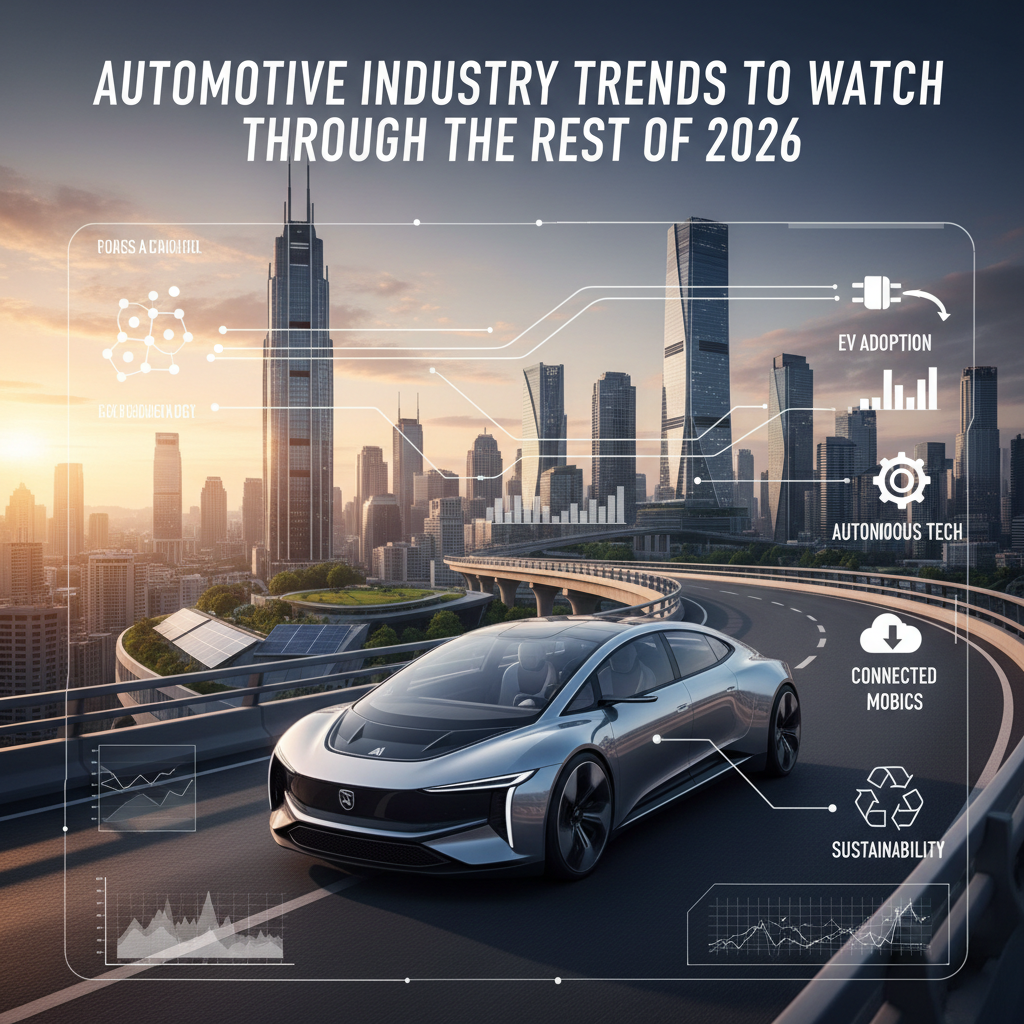
Automotive Industry Trends to Watch Through the Rest of 2026
The automotive landscape is undergoing a massive transformation, driven by rapid technological advancements, shifting consumer expectations, and an increasing emphasis on sustainability. As we navigate through the remainder of 2026, manufacturers and tech giants alike are redefining what it means to drive, own, and interact with modern vehicles. From breakthroughs in battery chemistry to the mainstream integration of advanced artificial intelligence, staying ahead of these shifts is crucial for anyone passionate about cars and mobility.


Understanding where the market is heading requires a close look at the innovations currently taking center stage. Whether you are an industry insider, a potential car buyer, or simply an enthusiast, the remainder of this year promises to deliver groundbreaking changes that will shape transportation for decades to come.
The Acceleration of Electric Mobility and Battery Tech
Electric vehicles (EVs) are no longer just a niche alternative to internal combustion engines; they are rapidly becoming the default choice for millions of drivers. However, the conversation in 2026 has shifted past mere adoption rates to focus heavily on infrastructure and battery efficiency. Solid-state batteries are finally moving out of laboratory settings and into early production fleets, offering significantly longer driving ranges and drastically reduced charging times.

Overcoming Range Anxiety
To support this surge in electric mobility, governments and private enterprises are aggressively expanding ultra-fast charging corridors. Key developments to watch include:

- Deployment of 400kW+ charging stations capable of adding 200 miles of range in under ten minutes.
- Standardization of charging ports across all major global automotive brands.
- Integration of wireless inductive charging pads in select metropolitan parking zones.
Software-Defined Vehicles and AI Integration
Vehicles are increasingly turning into computers on wheels. Software-defined vehicles (SDVs) allow automakers to push over-the-air updates that enhance performance, introduce new entertainment options, and tweak safety parameters long after a car has left the dealership lot. Artificial intelligence now powers everything from predictive maintenance alerts to hyper-personalized cabin environments that adjust seating, climate, and music based on driver moods and habits.
Redefining the Cabin Experience
Inside the car, digital cockpit displays have evolved past simple touchscreens. Augmented reality windshields project navigation cues and hazard warnings directly into the driver’s line of sight, minimizing distractions and enhancing overall safety on congested highways.
Sustainable Manufacturing and Circular Supply Chains
Environmental consciousness extends far beyond tailpipe emissions in 2026. Automakers are completely re-evaluating their supply chains, prioritizing recycled aluminum, plant-based interior textiles, and closed-loop battery recycling programs. By minimizing their carbon footprint from production to disposal, manufacturers are appealing to a growing demographic of eco-conscious buyers who demand transparency and accountability from the brands they support.
As we move through the rest of 2026, the automotive sector proves that innovation knows no bounds. Embracing these technological leaps ensures a safer, greener, and much more connected future on our roads.