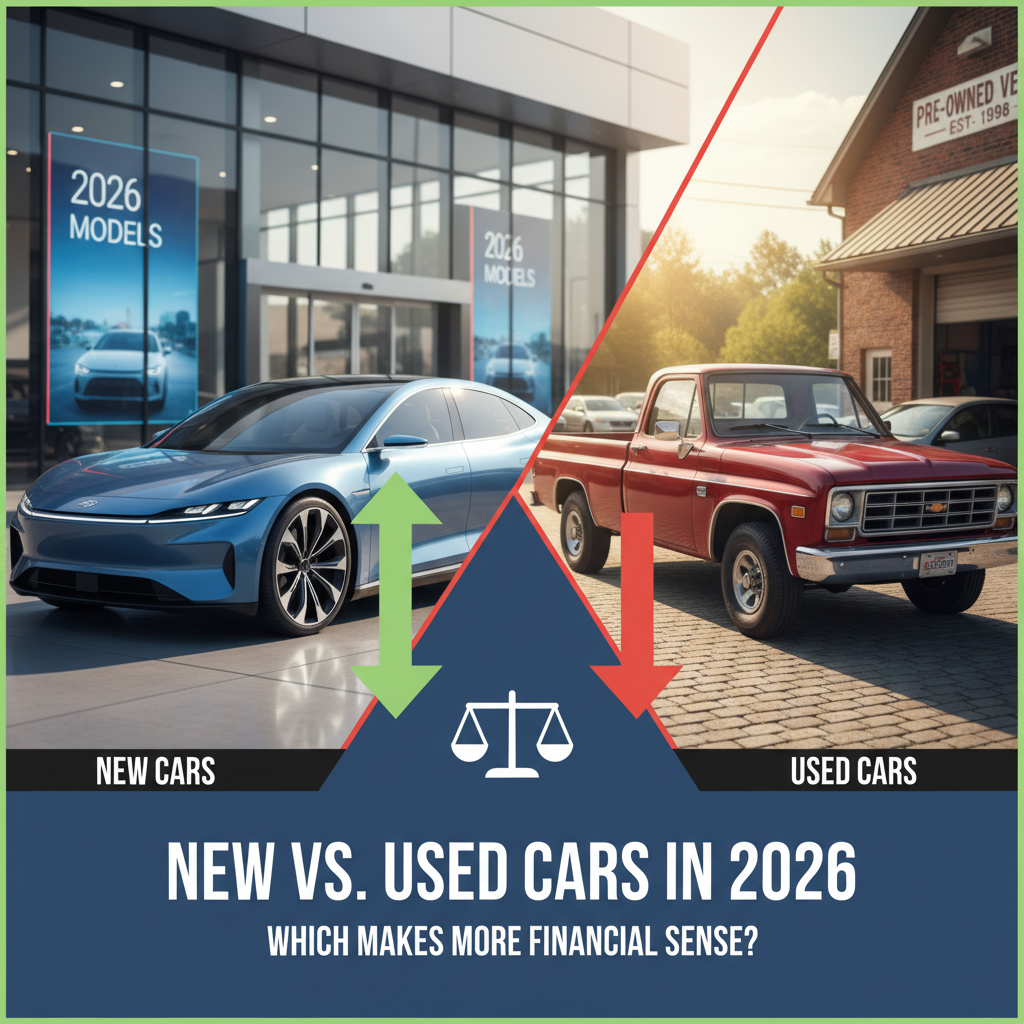
New vs. Used Cars in 2026: Which Makes More Financial Sense?
Navigating the 2026 Automotive Market
Deciding whether to purchase a brand-new vehicle or a pre-owned model has always been a major financial dilemma for drivers. As we navigate through 2026, the automotive landscape continues to evolve with shifting interest rates, technological leaps, and stabilizing supply chains. Choosing between new and used cars requires a careful evaluation of your long-term financial goals, driving habits, and the true cost of ownership.


The Case for Buying a New Car in 2026
Purchasing a brand-new vehicle comes with distinct advantages that often appeal to buyers looking for peace of mind. Modern manufacturing has introduced incredible advancements, particularly in electric vehicle ranges, autonomous safety features, and infotainment ecosystems. When you buy new, you are getting the absolute latest technology without compromise.
Benefits of Brand-New Vehicles
- Comprehensive Warranties: Most new cars include extensive factory coverage, saving you from unexpected repair bills during the first few years of ownership.
- Peak Reliability: With zero miles on the odometer, the likelihood of immediate mechanical failure is remarkably low.
- Financing Incentives: Automakers frequently offer promotional low-interest financing rates for qualified buyers choosing new models.
However, the elephant in the room remains depreciation. The moment a new car rolls off the dealership lot, it experiences a sharp drop in value. For buyers who prefer switching vehicles every three to four years, this rapid loss can dent your financial strategy.

Why Pre-Owned Vehicles Still Rule the Budget
For budget-conscious consumers, the used car market continues to offer compelling value propositions. While the dramatic price spikes of the early decade have largely normalized by 2026, buying a pre-owned vehicle allows you to bypass the steepest phase of depreciation entirely.

Advantages of Going the Used Route
- Lower Purchase Price: Your initial outlay is significantly smaller, which can translate to a smaller loan amount and reduced monthly payments.
- Cheaper Insurance: Insuring a used car is generally less expensive than covering a brand-new counterpart because the replacement value is lower.
- Slower Depreciation: A three-year-old car has already absorbed its major value drop, meaning it will retain its resale value much better during your ownership period.
On the flip side, used cars may lack the cutting-edge safety features found in newer releases. Furthermore, you must factor in the potential for out-of-pocket maintenance costs as components begin to wear out, especially if the vehicle is outside its manufacturer warranty.
Crunching the Numbers: Total Cost of Ownership
When determining whether a new or used vehicle makes more financial sense in 2026, you must look beyond the sticker price. Calculate the total cost of ownership, which includes fuel or electricity, routine maintenance, insurance premiums, and expected depreciation over the time you plan to keep the car. If you drive high mileage annually, a reliable new car with a strong warranty might offset its higher upfront cost. Conversely, if you drive sparingly, a well-maintained pre-owned car is usually the smarter monetary choice.
Final Verdict for 2026 Car Buyers
Ultimately, there is no one-size-fits-all answer. If you crave the latest technology, value warranty protection, and plan to keep your vehicle for a decade, buying new can be a sound investment. If you want to avoid heavy depreciation and keep your monthly financial obligations lean, a certified pre-owned vehicle is your best bet. Weigh your priorities, look at your monthly cash flow, and choose the path that aligns best with your financial future.