
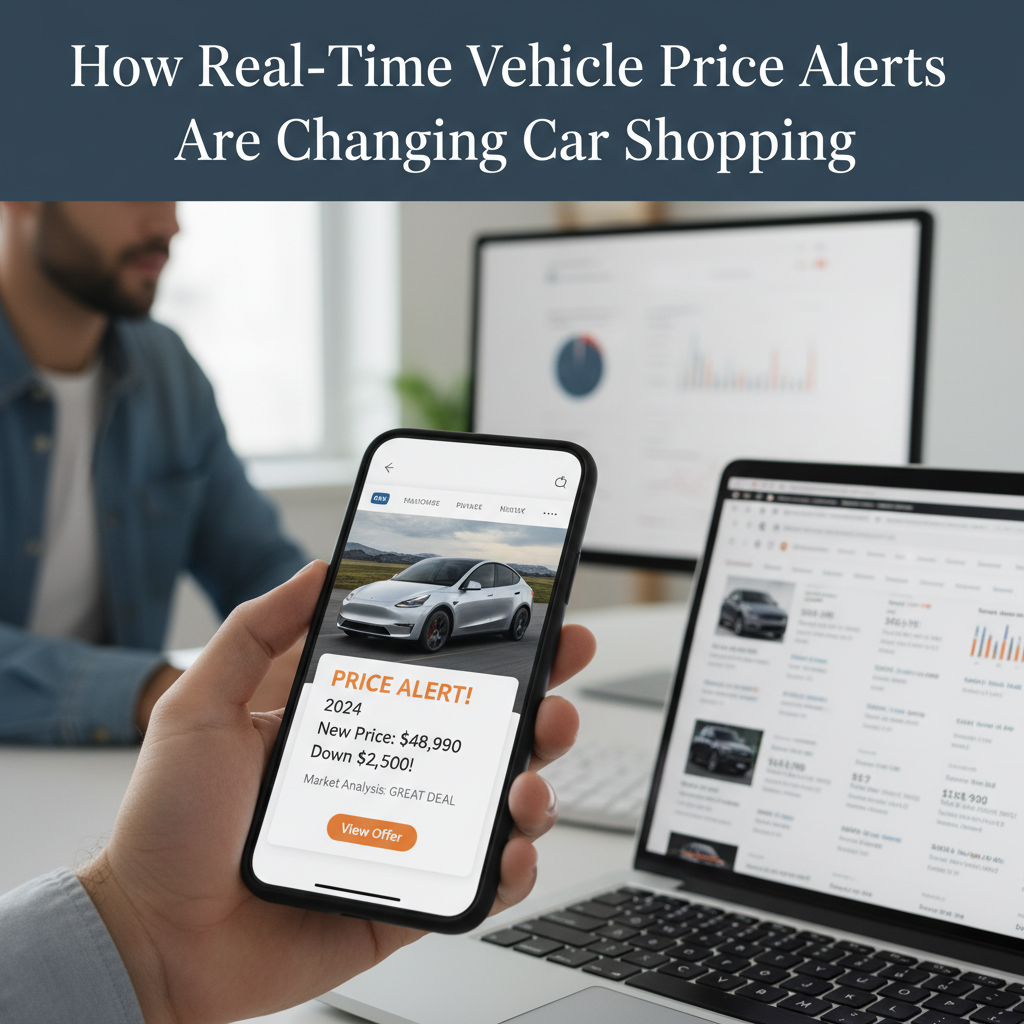
How Real-Time Vehicle Price Alerts Are Changing Car Shopping
Shopping for a new or used automobile has historically been an exercise in patience, negotiation, and endless dealership visits. For decades, prospective buyers felt they were working in the dark, constantly wondering if they missed a better deal just down the road. Today, however, the landscape of American car buying is undergoing a massive shift thanks to digital innovation. At the forefront of this transformation are real-time vehicle price alerts, a technological tool that is completely revolutionizing how consumers find, track, and purchase their next vehicles.


The Evolution of Automotive Retail
Not long ago, keeping track of vehicle pricing meant bookmarking dozens of dealership websites, checking local classified ads every Sunday, or physically driving from lot to lot. This fragmented process gave dealerships a distinct advantage, as they held most of the pricing data close to the chest. Buyers rarely knew when a vehicle was marked down or when a dealership was motivated to clear inventory.
As digital marketplaces evolved, price transparency naturally improved. Yet, consumers still had to manually check listings every single day to catch a bargain. The introduction of automated, instant price tracking changed everything. Instead of the buyer chasing the market, the market now comes directly to the buyer’s fingertips through instant notifications.

How Real-Time Alerts Work
Modern automotive platforms allow shoppers to save specific makes, models, trims, and maximum mileage thresholds to a virtual garage. Once a vehicle matching those precise parameters experiences a price drop, a notification is instantly triggered via text, push alert, or email.

Key Benefits for Modern Shoppers
- Instant Savings: Catch price reductions the moment they happen before another buyer snatches up the deal.
- Market Insight: Observe how long vehicles sit on lots and how aggressively dealerships drop prices over time.
- Zero Effort: Let automated tools do the heavy lifting instead of spending hours refreshing browser tabs.
- Enhanced Leverage: Armed with accurate historical pricing data, negotiations become much more data-driven.
This seamless flow of information shifts the power dynamic back toward the consumer. Dealerships now realize that modern buyers are hyper-informed and react almost instantly to market fluctuations.
Empowering the Budget-Conscious Buyer
Purchasing a car is typically the second-largest financial investment an individual will make outside of buying a home. For American households operating on tight budgets, every single dollar matters. Real-time pricing tools act as a personal financial assistant, ensuring that buyers never overpay out of sheer impatience.
Furthermore, these systems help buyers understand seasonal trends and regional price disparities. If a specific SUV model is overpriced in a metropolitan area, automated tracking might reveal that dealerships fifty miles away are slashing prices to meet monthly quotas. Armed with this knowledge, shoppers can make strategic decisions about where and when to buy.
The Future of the Car Buying Experience
As artificial intelligence and machine learning continue to integrate into automotive retail, price tracking will only become more sophisticated. Future iterations may even predict when a dealer is likely to drop a price based on inventory age and foot traffic, offering buyers strategic advice on whether to purchase now or wait twenty-four hours.
Ultimately, real-time vehicle price alerts have turned a historically stressful and opaque process into a streamlined, transparent experience. By leveling the playing field, these digital tools ensure that American car buyers can secure the best possible value with confidence and ease.