
How to Know You’re Getting a Good Car Deal in 2026
How to Know If You’re Getting a Good Deal on a Car in 2026
Buying a car in 2026 requires more than comparing the sticker prices of a few nearby dealerships. Prices, interest rates, incentives, trade-in values, insurance costs, and vehicle availability can all affect the real cost of ownership.


Whether you are shopping for a new car, used vehicle, hybrid, or electric model, the goal is the same: determine whether the total deal makes financial sense for your situation.
Research the Market Price First
Before visiting a dealership or applying for financing, research the vehicle’s current market value. Compare prices for the same:

- Make, model, and trim
- Model year
- Mileage
- Optional features
- Condition
- Geographic location
Online pricing tools can help you estimate a fair purchase range, but do not rely on a single source. Check several listings and valuation guides to identify the typical price rather than focusing on the cheapest listing.

For used cars, a low price may reflect accident history, poor maintenance, a salvage title, or expensive upcoming repairs. A slightly higher price may be the better value if the vehicle has complete records and a strong inspection report.
Focus on the Out-the-Door Price
A dealer’s advertised price is rarely the final amount you will pay. Ask for a written out-the-door price that includes:
- Vehicle price
- Dealer fees
- Documentation charges
- Destination fees
- Taxes
- Registration costs
- Add-ons and accessories
- Any financing or service-contract charges
This is one of the most reliable ways to determine if you are getting a good deal on a car in 2026. Comparing monthly payments alone can be misleading because a dealer may lower the payment by extending the loan term or requiring a larger down payment.
Compare the total amount financed and the total amount paid over the life of the loan, not just the monthly figure.
Compare Financing Offers Separately
Dealership financing can be convenient, but it may not always be the least expensive option. Get loan quotes from a bank, credit union, or online lender before negotiating with the dealer.
Pay close attention to:
- Annual percentage rate
- Loan term
- Required down payment
- Total interest
- Prepayment penalties
- Conditions attached to promotional rates
Some manufacturers offer low promotional rates instead of cash rebates. Calculate both options to see which saves more. A cash discount may be better for one buyer, while a low-interest loan may be more valuable for another.
Avoid choosing a longer loan simply to make the payment fit your budget. Long terms can leave you owing more than the car is worth, especially if depreciation is significant.
Evaluate Incentives Carefully
In 2026, incentives may vary by brand, region, inventory level, and buyer eligibility. Potential savings can include:
- Manufacturer rebates
- Loyalty discounts
- First-responder or military programs
- College-graduate offers
- Financing incentives
- Lease specials
- Government or local electric-vehicle incentives
Read the eligibility requirements carefully. Some offers apply only to specific trims, financing arrangements, or inventory units. Tax credits and other incentives may also depend on income, vehicle price, battery specifications, or where the vehicle is assembled.
Treat incentives as part of the total calculation rather than assuming every advertised discount applies to you.
Check the Vehicle’s History and Condition
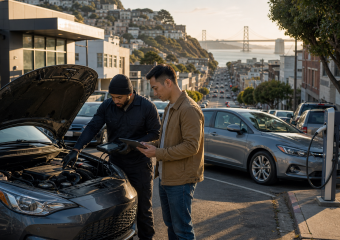
A fair price cannot compensate for a vehicle with serious mechanical or structural problems. For a used car, obtain a vehicle history report and arrange an independent pre-purchase inspection.
Ask the inspector to examine:
- Engine and transmission performance
- Brake and tire condition
- Suspension components
- Signs of flood or collision damage
- Fluid leaks
- Electrical systems
- Hybrid or electric battery health
For an electric vehicle, battery condition is especially important. Ask about remaining warranty coverage, charging performance, battery degradation, and previous fast-charging use when information is available.
Calculate Ownership Costs
The purchase price is only one part of the deal. Estimate the vehicle’s expected costs for at least the first three years, including:
- Insurance
- Fuel or charging
- Maintenance
- Repairs
- Registration
- Depreciation
- Financing interest
A vehicle with a slightly higher purchase price may be cheaper to own if it has better fuel economy, lower insurance costs, stronger resale value, or a longer warranty.
Know When to Walk Away
A good deal should be clear and easy to verify. Be cautious if the seller:
- Refuses to provide an out-the-door price
- Pressures you to decide immediately
- Adds products without clear consent
- Changes terms at the last minute
- Discourages an independent inspection
- Focuses only on monthly payments
Take time to compare the complete numbers. In 2026, the best car deal is not necessarily the one with the lowest advertised price. It is the one that combines a fair market value, reasonable financing, transparent fees, dependable condition, and manageable long-term ownership costs.