
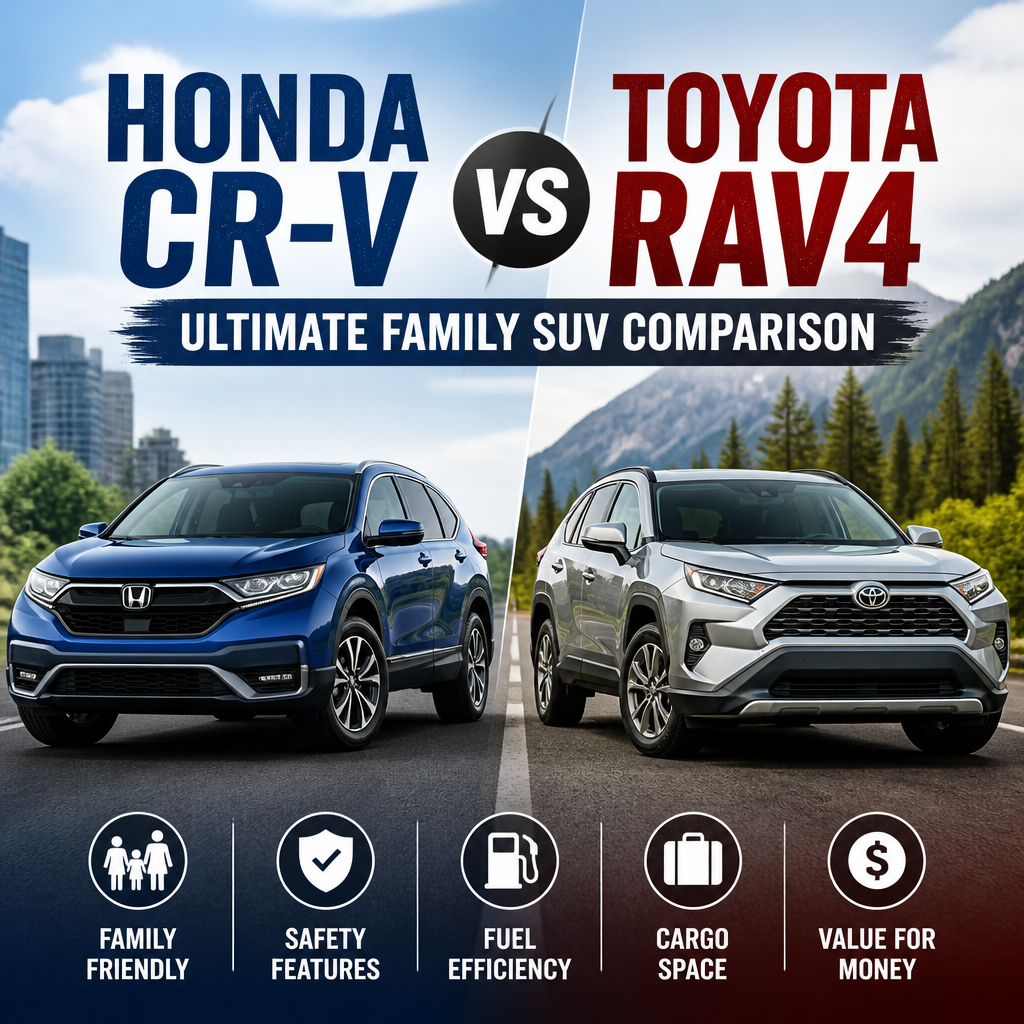
Honda CR-V vs Toyota RAV4: Ultimate Family SUV Comparison
Honda CR-V vs Toyota RAV4: The Ultimate Family SUV Comparison
Choosing the right family SUV means balancing comfort, practicality, fuel economy, safety, and long-term value. Two of the most popular choices in this segment are the Honda CR-V and Toyota RAV4. Both offer spacious interiors, strong reliability reputations, and a wide range of family-friendly features.


So, which one is the better choice? The answer depends on your priorities, but this comparison highlights the key differences between the Honda CR-V and Toyota RAV4.
Exterior Design and Road Presence
The Honda CR-V has a clean, modern design with a refined appearance. Its smooth body lines and upright profile give it a mature look, while higher trim levels add stylish wheels, LED lighting, and other premium touches.

The Toyota RAV4 takes a more rugged approach. Its sharper styling, bold grille, and available adventure-inspired trims make it stand out from many competitors. Families who want an SUV with a tougher appearance may prefer the RAV4, while those seeking a more understated design may favor the CR-V.

Both vehicles are easy to drive in urban environments and offer available all-wheel drive for improved confidence in rain, snow, and light off-road conditions.
Interior Comfort and Space
Interior practicality is one of the strongest qualities shared by both SUVs. The Honda CR-V is especially impressive for rear-seat passengers, offering generous legroom and a comfortable seating position. Its wide-opening doors also make it easier to install child seats or help younger children get in and out.
The CR-V’s cabin has a simple, organized layout, with well-placed controls and useful storage areas. Higher trims provide features such as leather-trimmed seating, heated front seats, wireless smartphone charging, and a power liftgate.
The Toyota RAV4 also offers a spacious cabin with supportive seats and durable materials. Its upright seating position provides good visibility, and the interior is designed to handle everyday family life. Depending on the trim, buyers can find heated seats, a panoramic roof, dual-zone climate control, and premium audio systems.
For overall rear-seat comfort, the Honda CR-V has a slight advantage. However, the RAV4’s interior may appeal to families who prioritize a more rugged and utility-focused atmosphere.
Cargo Capacity and Everyday Practicality
Both SUVs are well suited to school runs, grocery trips, road vacations, and weekend activities. Their rear seats fold down to create a large cargo area for strollers, sports equipment, luggage, and home-improvement supplies.
The Honda CR-V is known for its excellent cargo flexibility. Its low loading floor makes it easier to lift heavier items, while the square shape of the cargo area helps maximize usable space.
The Toyota RAV4 is similarly practical, with a wide rear opening and useful underfloor storage in many versions. It may be particularly appealing to active families who regularly carry bicycles, camping equipment, or outdoor gear.
Performance and Fuel Economy
The Honda CR-V delivers smooth, composed performance and a comfortable ride. Its available hybrid powertrain provides responsive acceleration and strong fuel efficiency, making it a practical choice for families who spend considerable time commuting.
The Toyota RAV4 has long been recognized for its efficient hybrid option. The RAV4 Hybrid combines confident acceleration with excellent fuel economy, while the available RAV4 Prime plug-in hybrid offers additional electric driving capability for buyers who can charge at home.
The CR-V generally emphasizes quietness and ride comfort, whereas the RAV4 offers a slightly more direct and rugged driving character. Neither SUV is designed as a sports car, but both provide enough power for highway merging, daily errands, and family road trips.
Safety and Driver Assistance
Safety is a major consideration for any family vehicle. Both the Honda CR-V and Toyota RAV4 come equipped with comprehensive driver-assistance technology, although specific features vary by trim and model year.
Common systems include:
- Automatic emergency braking
- Adaptive cruise control
- Lane-keeping assistance
- Blind-spot monitoring
- Rear cross-traffic alert
- Traffic-sign recognition
The CR-V’s safety technology is generally smooth and easy to use, while the RAV4 offers a similarly strong collection of protective features. Families should compare individual trim levels carefully, since advanced equipment may be standard on one version but optional on another.
Reliability and Ownership Value
Honda and Toyota both have strong reputations for reliability, and either SUV can be a sensible long-term investment when properly maintained. The Toyota RAV4 often has an advantage in resale value, particularly in the popular hybrid market.
The Honda CR-V counters with a comfortable interior, excellent everyday usability, and a reputation for low running costs. Insurance rates, maintenance prices, fuel expenses, and warranty coverage can vary, so buyers should consider total ownership costs rather than focusing only on the purchase price.
Which Family SUV Should You Choose?
The Honda CR-V is an excellent choice for families who value:
- A comfortable and spacious rear seat
- A quiet, refined ride
- Flexible cargo space
- A clean, modern interior
- Smooth hybrid performance
The Toyota RAV4 may be the better fit for drivers who want:
- A rugged exterior design
- Strong hybrid efficiency
- Available plug-in hybrid capability
- Excellent resale value
- A more adventure-oriented character
Ultimately, both SUVs are practical, safe, and well equipped. The Honda CR-V is the more comfort-focused option, while the Toyota RAV4 offers a bolder design and broader electrified lineup. A test drive in both models is the best way to determine which SUV fits your family’s lifestyle, budget, and driving habits.