
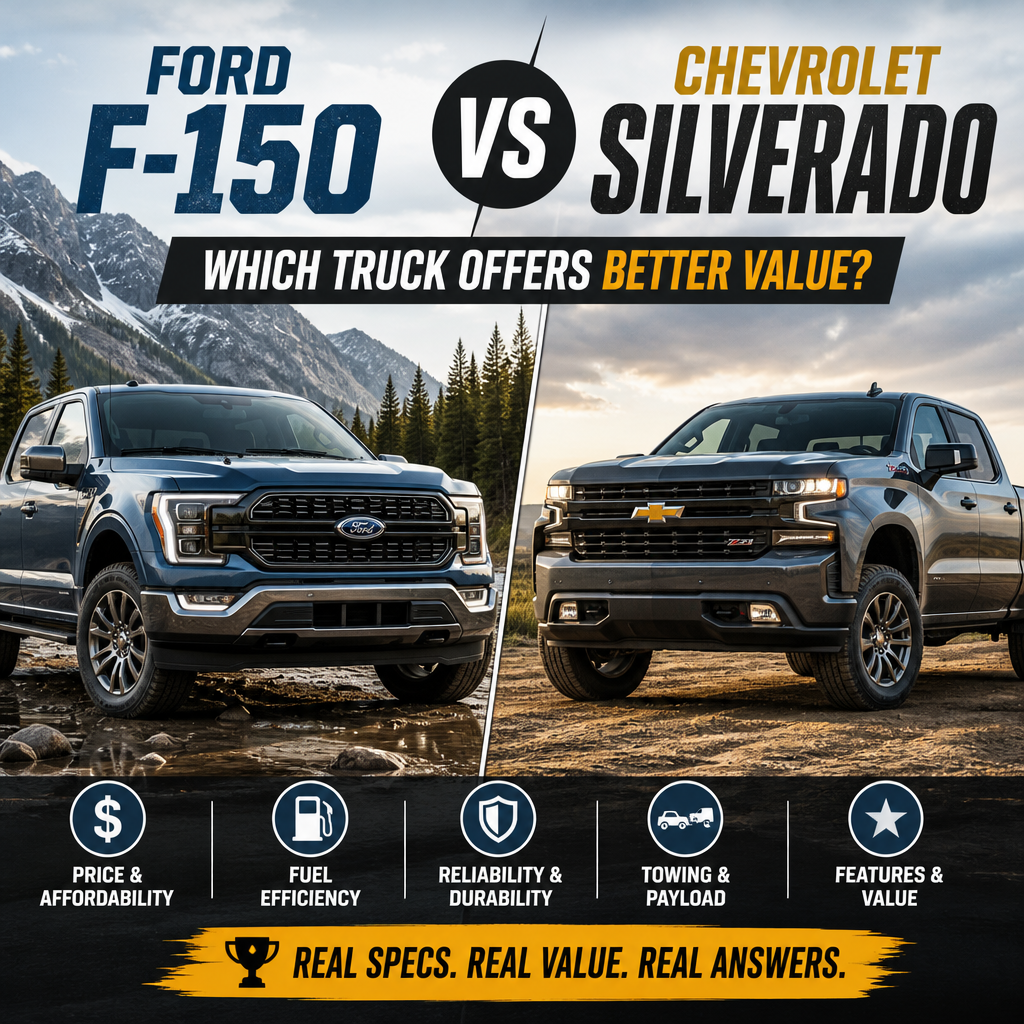
Ford F-150 vs Chevrolet Silverado: Which Truck Offers Better Value?
Ford F-150 vs. Chevrolet Silverado: Which Truck Delivers More Value?
The Ford F-150 and Chevrolet Silverado 1500 are two of the most recognizable full-size pickup trucks on the market. Both offer strong towing capability, practical cabin options, and a wide range of trims. However, choosing between them depends on how you define value.


For some drivers, value means a lower purchase price. For others, it means better fuel economy, more useful technology, stronger resale potential, or a truck that can handle demanding work. Here is how the Ford F-150 vs. Chevrolet Silverado comparison breaks down.
Pricing and Trim Variety
Both trucks offer multiple configurations, from basic work trucks to luxurious, highly equipped models.

The Chevrolet Silverado typically attracts buyers with a competitive starting price and a straightforward lineup. Its entry-level Work Truck trim focuses on essential capability rather than comfort, making it a practical choice for businesses and budget-conscious owners. Higher trims add upgraded materials, larger screens, advanced driver assistance, and premium features.

The Ford F-150 usually costs slightly more in comparable configurations, but it offers an exceptionally broad selection of trims and options. Buyers can choose from work-focused models, family-friendly crew cabs, off-road versions, and luxury-oriented trims. The F-150 lineup also includes the performance-focused Raptor and hybrid powertrain options.
For buyers seeking the lowest initial cost, the Silverado may have an advantage. However, Ford’s wider range of configurations makes it easier to select a truck that closely matches specific needs.
Engine Choices and Fuel Economy
The F-150 and Silverado both offer several engines, including efficient six-cylinder options and powerful V8s.
Ford’s available engines include a turbocharged EcoBoost V6, a traditional 5.0-liter V8, and a hybrid powertrain that combines a gasoline engine with an electric motor. The hybrid is especially appealing for drivers who want strong low-speed torque and improved fuel efficiency without moving to a fully electric truck.
Chevrolet offers turbocharged four-cylinder engines, a 5.3-liter V8, a 6.2-liter V8, and a turbocharged diesel option in many configurations. The diesel is an excellent choice for frequent towing because it delivers substantial torque and can provide strong highway fuel economy.
The better choice depends on driving habits:
- Choose the F-150 hybrid for a balance of power and efficiency.
- Choose the Silverado diesel for long-distance towing and heavy-duty use.
- Choose a V8 model from either brand for traditional truck performance and sound.
- Consider a turbocharged four- or six-cylinder engine for daily driving and moderate workloads.
Towing and Payload Capability
Both trucks can tow substantial loads when properly equipped, but maximum ratings vary by engine, cab, bed, and drivetrain.
The F-150 is known for its strong maximum towing capacity and useful towing technology. Available features can include trailer-focused camera views, hitch assistance, trailer brake controls, and onboard scales that estimate payload. These tools can make hitching and hauling easier for inexperienced owners.
The Silverado also offers impressive towing capability, particularly with its diesel and larger V8 engines. Chevrolet provides trailer camera systems and towing features designed to improve visibility and confidence. Its diesel engine is especially well suited to drivers who regularly pull heavy trailers over long distances.
For occasional towing, either truck should provide more than enough capability. Buyers who tow frequently should compare the exact configuration rather than relying only on advertised maximum ratings.
Interior Comfort and Technology
The F-150 generally has an edge in interior versatility and storage. Depending on the trim, it can include a fold-down work surface, expansive door pockets, clever under-seat storage, and a spacious crew cab. Its infotainment system is typically easy to use, with large displays available on upper trims.
The Silverado counters with a roomy cabin and an intuitive technology layout. Higher trims provide comfortable seating, upscale materials, and a large central touchscreen. Chevrolet’s rear-seat space is also generous in crew-cab models, making the truck suitable for families.
Ford may appeal more to buyers who use their truck as a mobile office, while Chevrolet offers a comfortable and functional environment for both work and everyday travel.
Reliability, Resale, and Ownership Costs
Long-term value involves more than the purchase price. Maintenance costs, insurance, fuel consumption, reliability, and resale value all affect the total cost of ownership.
Both trucks have large dealer networks and widely available replacement parts. Maintenance expenses can vary significantly based on engine choice, drivetrain, location, and service needs. A simpler work-truck configuration may cost less to maintain than a luxury model with complex features.
The F-150 has historically maintained strong demand in the used-truck market. The Silverado also benefits from a loyal customer base and competitive resale performance. To maximize value, buyers should choose a configuration with widely available parts, avoid unnecessary options, and follow the recommended maintenance schedule.
Final Verdict
The Ford F-150 vs. Chevrolet Silverado decision does not produce one universal winner.
The F-150 is the stronger all-around choice for buyers who want more configurations, innovative storage features, a hybrid option, and advanced work-focused technology. It is particularly appealing to owners who use their truck for a mix of commuting, family transportation, and hauling.
The Silverado may deliver better value for buyers focused on a competitive price, traditional V8 power, or efficient diesel towing. Its straightforward lineup and capable engines make it an excellent choice for work and long-distance hauling.
Ultimately, the best value comes from matching the truck to your actual needs. Compare similarly equipped models, calculate fuel and insurance costs, and prioritize the capabilities you will use most often.