
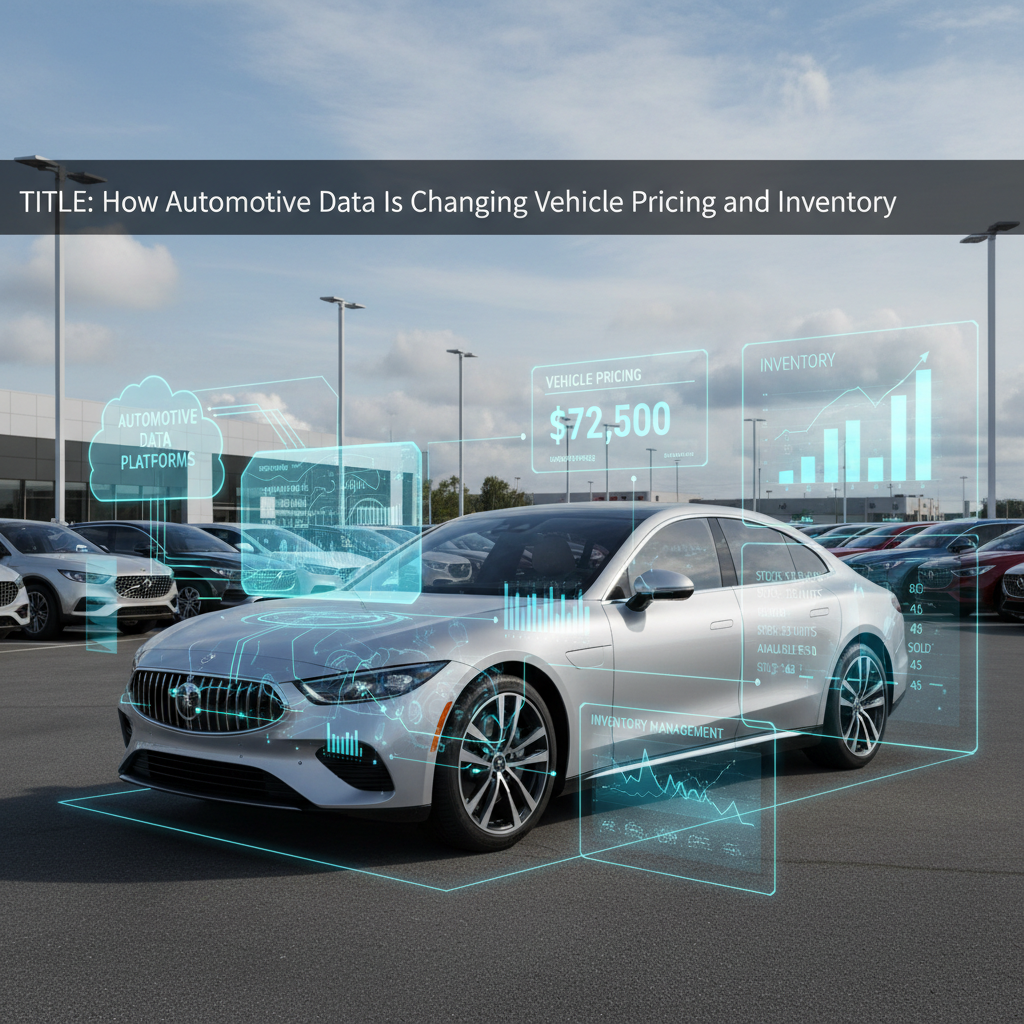
How Automotive Data Is Changing Vehicle Pricing and Inventory
Introduction to the Data-Driven Automotive Landscape
The automotive industry has undergone a massive digital transformation over the past decade. Gone are the days when dealership lot managers relied purely on gut instinct, regional traditions, or month-end guesswork to stock vehicles and set prices. Today, a sophisticated web of algorithms, real-time market feeds, and predictive analytics dictates how cars are bought, priced, and sold. Automotive data has fundamentally altered the mechanics of supply and demand, creating a hyper-responsive marketplace where both traditional dealerships and digital-first platforms must adapt or risk falling behind.


This shift goes far beyond simple spreadsheet tracking. By tapping into granular data points—ranging from local search trends and historical auction outcomes to macroeconomic indicators—industry professionals can forecast consumer needs with unprecedented precision. Understanding how this data influences pricing strategies and inventory management sheds light on the modern car-buying journey and the competitive nature of today’s automotive sector.
The Evolution of Dynamic Vehicle Pricing
Vehicle pricing used to be a static, often arbitrary process determined by MSRP recommendations, basic regional competition, and a general target profit margin. If a car sat on the lot too long, managers would slash the price manually until someone bought it. Modern pricing models, however, are dynamic, automated, and continuously updated.

Real-Time Market Intelligence
Advanced pricing tools ingest millions of data points every single day. They evaluate comparable listings across hundreds of miles, tracking how quickly similar makes, models, and trim levels sell. If supply for a specific compact SUV drops regionally, algorithms instantly alert dealers to adjust their prices upward. Conversely, if a surplus of sedans enters the market, pricing intelligence software suggests immediate, competitive adjustments to prevent vehicles from stagnating on the lot.

Factors Influencing Algorithmic Pricing
Algorithmic pricing engines evaluate a wide variety of inputs to arrive at the optimal sticker price:
- Days on Lot (DOM): Tracking how long a specific vehicle has been physically present helps systems automatically scale discounts as aging thresholds approach.
- Trim Level Popularity: Granular data breaks down which specific features, packages, and engine choices command premium values in local micro-climates.
- Seasonal Fluctuations: Historical buying patterns ensure that convertible sports cars are priced higher in spring, while all-wheel-drive crossovers see algorithmic bumps ahead of winter.
Revolutionizing Inventory Management Through Predictive Analytics
Acquiring and maintaining the right vehicle mix is arguably the most challenging task for any inventory manager. Holding the wrong cars ties up capital, incurs floor-plan interest, and damages overall profitability. Predictive analytics has revolutionized this discipline by replacing reactive stocking with proactive acquisition strategies.
Instead of guessing what features consumers want, dealerships now connect their Customer Relationship Management (CRM) and Dealer Management Systems (DMS) to predictive platforms. These systems analyze patterns in test drives, online configurator builds, and local inquiry volumes to identify rising stars long before they peak in popularity.
Smarter Wholesale Sourcing
Data has also transformed how wholesale inventory is acquired. Rather than traveling blindly to physical auctions, buyers utilize digital platforms that aggregate hundreds of wholesale marketplaces into a single interface. Armed with predictive valuation models, buyers can spot arbitrage opportunities—purchasing under-priced vehicles in one region and shipping them to another market where demand commands a higher price.
Overcoming Challenges in a Data-Saturated Market
While data provides a clear competitive advantage, an over-reliance on automated tools without proper strategic oversight can introduce new hurdles. For instance, aggressive algorithmic price-matching can inadvertently trigger localized price wars, eroding profit margins across the board. Furthermore, relying entirely on historical trends can sometimes blind businesses to sudden structural shifts in the economy or erratic changes in consumer sentiment.
To truly succeed, automotive professionals must combine raw analytical power with human oversight. Interpreting data within the context of community trends, brand reputation, and customer relationships ensures that technology serves as an enabler rather than a strict dictator of business operations.
Looking Ahead
As vehicle connectivity grows and artificial intelligence continues to mature, the role of data in the automotive sector will only expand. Real-time telemetry, predictive maintenance insights, and instantaneous market adjustments will become standard operating procedure. For dealerships and automotive enterprises alike, mastering data analytics is no longer an optional luxury; it is the core engine driving profitability, efficiency, and customer satisfaction in a fast-paced global market.