The Smart Buyer’s Checklist Before Purchasing Any Vehicle
The Smart Buyer’s Checklist Before Purchasing Any Vehicle
Buying a vehicle is a major financial decision. Whether you are choosing a brand-new car, a used SUV, or a work truck, the right preparation can help you avoid expensive mistakes. A vehicle may look appealing on the surface, but its condition, ownership costs, and history matter just as much as its appearance.


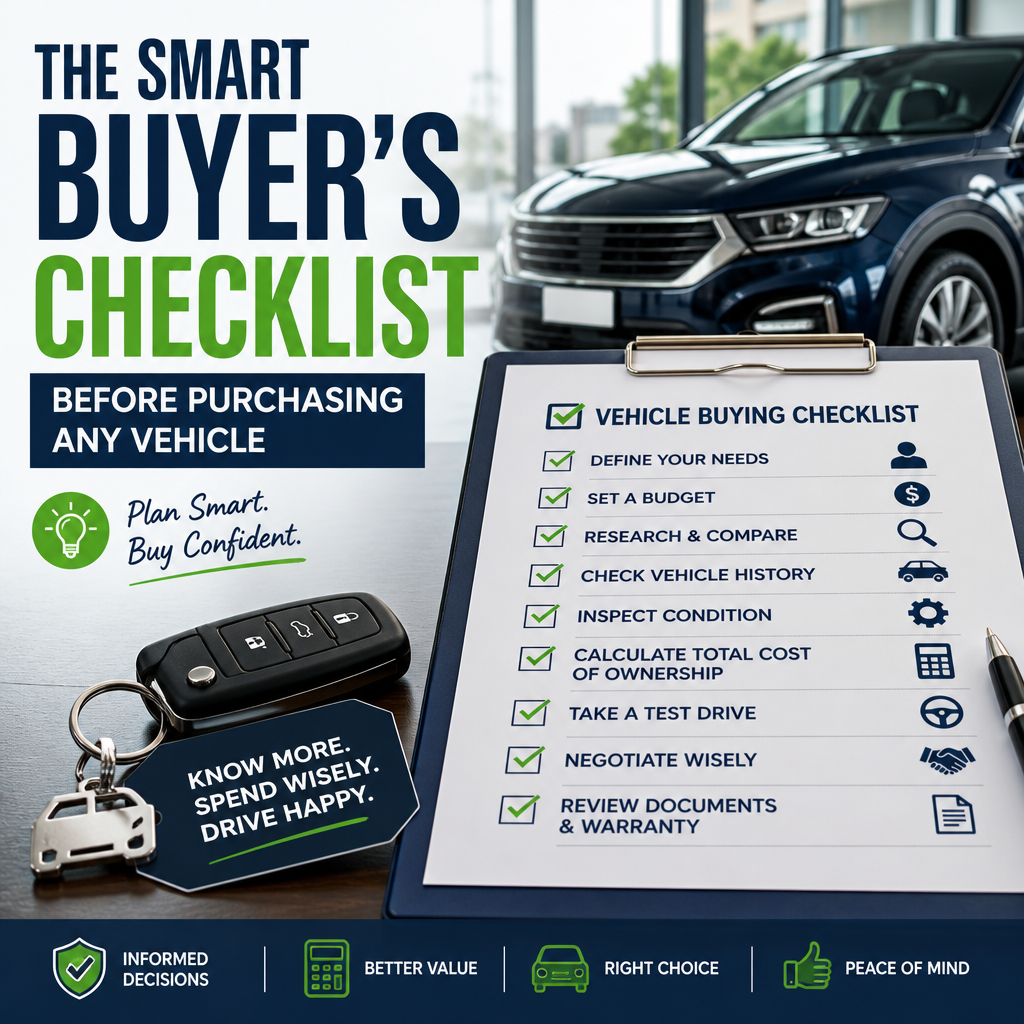
Use this smart buyer’s checklist before signing any paperwork.
1. Define Your Needs and Budget
Before visiting a dealership or browsing online listings, determine what you actually need from a vehicle. Consider:

- How many passengers you regularly carry
- Your typical driving conditions
- Fuel economy expectations
- Cargo or towing requirements
- Preferred safety and technology features
- New versus used vehicle preferences
Next, establish a realistic budget. Your vehicle payment is only one part of ownership. Include costs such as:

- Insurance
- Fuel or charging
- Maintenance and repairs
- Registration and taxes
- Parking
- Loan interest
As a general rule, avoid choosing a vehicle based solely on the maximum monthly payment you can afford. A longer loan term may make payments appear lower while increasing the total amount you pay.
2. Research the Vehicle Thoroughly
Once you know what type of vehicle you want, compare different makes, models, and trim levels. Look at professional reviews, owner feedback, reliability ratings, safety scores, and recall information.
Pay close attention to the differences between trim levels. A lower-priced model may lack important features, while a slightly higher trim could offer better value if it includes safety equipment, improved technology, or a more efficient powertrain.
For used vehicles, research common problems associated with the model and year. Knowing about frequent transmission issues, excessive oil consumption, or costly electrical repairs can help you ask better questions and negotiate more effectively.
3. Check the Vehicle’s History
A vehicle history report is essential when buying used. It may reveal:
- Previous accidents
- Title problems
- Flood or fire damage
- Odometer discrepancies
- Number of previous owners
- Service and registration records
A clean report does not guarantee that a vehicle is perfect, but missing or suspicious information should be treated as a warning sign. If the seller refuses to provide the vehicle identification number, consider looking elsewhere.
You should also verify that the VIN on the dashboard matches the VIN on the title, registration, and other documents.
4. Inspect the Vehicle Carefully
Never rely only on photographs or a quick walk-around. Examine the vehicle in good daylight and look for uneven panel gaps, mismatched paint, rust, dents, and signs of previous repairs.
Inspect the tires for even wear and adequate tread. Uneven wear may indicate alignment, suspension, or steering problems. Check the windshield, lights, mirrors, windows, and body panels for damage.
Inside the vehicle, test:
- Air conditioning and heating
- Power windows and locks
- Infotainment and navigation systems
- Cameras and parking sensors
- Seat adjustments
- Warning lights
- Interior lights and controls
For a used vehicle, arrange an independent pre-purchase inspection with a qualified mechanic. This step can uncover mechanical issues that are difficult for an average buyer to identify.
5. Take a Comprehensive Test Drive
A test drive should last long enough to evaluate the vehicle in different conditions. Drive on city streets, highways, and uneven roads when possible.
Notice how the vehicle starts, accelerates, brakes, and changes gears. Listen for unusual rattles, squeaks, grinding, or knocking sounds. The steering should feel stable, and the vehicle should not pull strongly to one side.
Test the brakes at different speeds and pay attention to vibration or unusual noises. Also check your visibility, seating position, mirror placement, and overall comfort. A vehicle that feels uncomfortable during a short drive may become frustrating over months or years of ownership.
6. Understand the Full Price
Ask for an itemized breakdown of the total purchase price. This should include the vehicle price, taxes, registration, documentation fees, financing charges, warranties, and optional products.
Be cautious of unnecessary add-ons, such as extended warranties, paint protection, fabric treatments, or security systems. Some may provide value, but others can significantly increase the cost without offering meaningful benefits.
When financing, compare offers from banks, credit unions, and dealerships. Focus on the annual percentage rate, loan term, total interest, and total amount payable—not just the monthly payment.
7. Review Every Document
Before signing, read the sales contract carefully. Confirm that the agreed price, interest rate, loan term, mileage, warranty coverage, and included equipment are correct.
Never sign documents that contain blank spaces or terms you do not understand. Ask for copies of all paperwork, including the purchase agreement, financing contract, warranty details, inspection report, and vehicle history report.
Make a Confident Decision
The smartest vehicle purchase is not always the newest, cheapest, or most attractive option. It is the vehicle that fits your needs, remains affordable over time, and passes careful research and inspection.
By following this checklist, you can make a more informed decision, identify potential problems early, and enjoy greater confidence long after you drive away.