Toyota Highlander vs Honda Pilot: Which SUV Is the Better Buy?
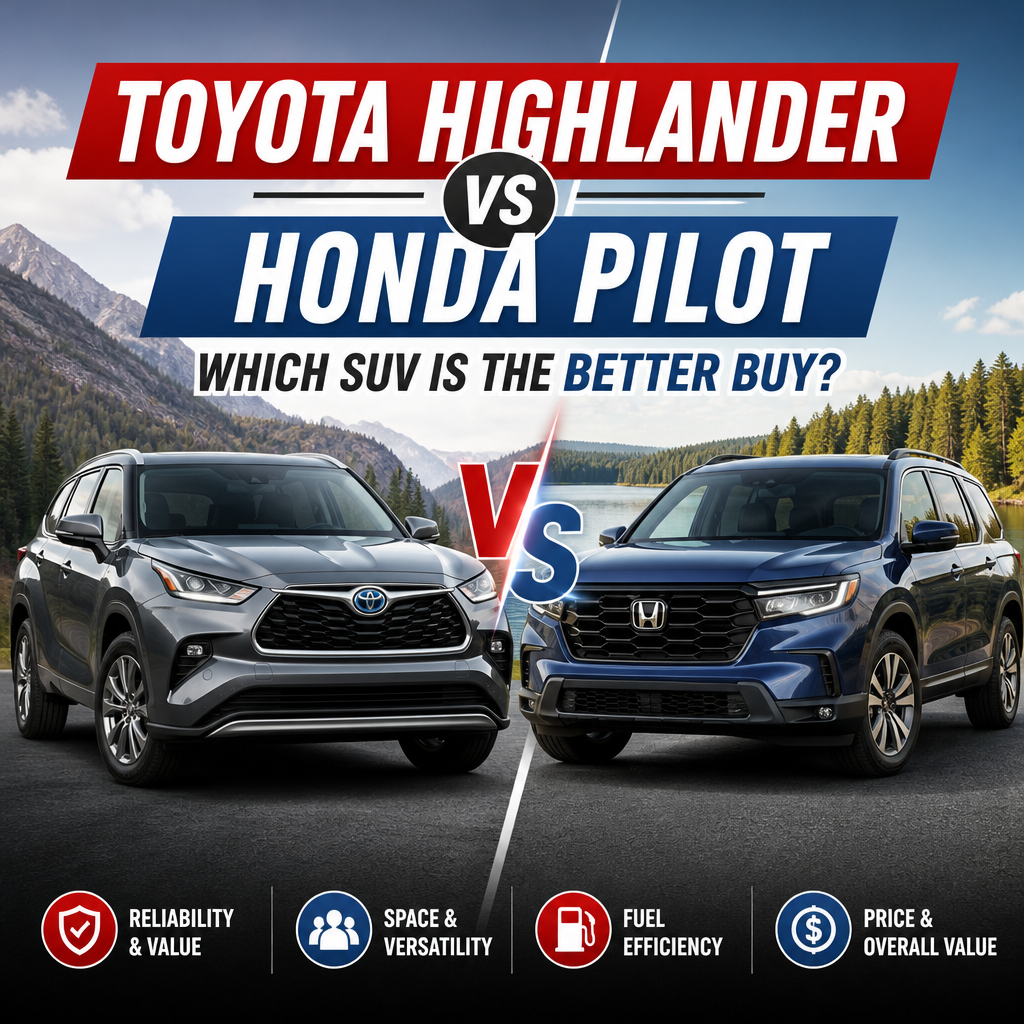
Toyota Highlander vs. Honda Pilot: Which SUV Is the Better Buy?
The Toyota Highlander and Honda Pilot are two of the most popular midsize SUVs for families. Both offer three rows of seating, practical cargo space, strong safety features, and comfortable road manners. However, they take different approaches to performance, efficiency, and interior design.


Choosing between them depends on your priorities. The Toyota Highlander is appealing for buyers who value fuel economy, hybrid availability, and a polished driving experience. The Honda Pilot stands out with a roomier cabin, stronger standard power, and excellent versatility.
Performance and Fuel Economy
The Toyota Highlander comes standard with a turbocharged four-cylinder engine that produces 265 horsepower. It delivers smooth acceleration for daily driving and can tow up to 5,000 pounds when properly equipped. An available hybrid powertrain combines a gas engine with electric motors, producing 243 horsepower while offering significantly better fuel economy.

The Highlander Hybrid is particularly attractive for families with long commutes or frequent road trips. It provides the efficiency of a smaller SUV while retaining three-row practicality.

The Honda Pilot uses a naturally aspirated 3.5-liter V6 engine that produces 285 horsepower. Its standard powertrain feels responsive, especially when merging onto highways or carrying a full load of passengers. Like the Highlander, the Pilot can tow up to 5,000 pounds with the appropriate equipment.
However, the Pilot does not currently offer a hybrid option. Its V6 engine provides strong performance, but fuel costs may be higher than with the Highlander Hybrid.
Performance highlights:
- Toyota Highlander: Better fuel economy and available hybrid powertrain
- Honda Pilot: More horsepower and confident acceleration
- Both SUVs: Available all-wheel drive and a maximum towing capacity of 5,000 pounds
Interior Space and Comfort
The Honda Pilot has an advantage when it comes to interior room. Its cabin feels open and accommodating, with generous passenger space in all three rows. Adults can sit more comfortably in the third row, making the Pilot a strong choice for larger families.
Depending on the trim, the second-row center seat can be removed to create captain’s chairs or restored when additional seating is needed. This flexible arrangement is useful for families who frequently adjust their seating configuration.
The Toyota Highlander has a refined and comfortable interior, but its third row is tighter than the Pilot’s. It works well for children and smaller adults, though taller passengers may prefer the Honda. The Highlander’s cabin is attractively designed, with user-friendly controls and a quiet ride on most roads.
Cargo capacity is also a consideration. The Pilot generally offers more room behind the third row and greater overall flexibility when the rear seats are folded. The Highlander remains practical for groceries, sports equipment, and family luggage, but it is not quite as spacious.
Technology and Safety
Both SUVs include a wide range of standard driver-assistance features. Toyota’s Safety Sense system and Honda Sensing suite typically include automatic emergency braking, adaptive cruise control, lane-keeping assistance, and road-sign recognition.
The Highlander’s technology is straightforward and easy to use. Newer models offer modern touchscreen interfaces, smartphone integration, and available features such as a head-up display and surround-view camera system on higher trims.
The Pilot also provides a user-friendly infotainment system, with larger screens available in upper trim levels. Its available camera systems and parking aids can be especially helpful in crowded areas. Honda also offers useful family-focused details, such as multiple USB ports and convenient storage compartments throughout the cabin.
Pricing and Ownership Value
Pricing varies by trim, drivetrain, and options, but the Highlander and Pilot occupy similar positions in the midsize SUV market. The Highlander Hybrid typically costs more upfront than the standard gas model, though its fuel savings can make it a smart long-term choice.
The Pilot may offer stronger value for buyers who need maximum interior space and standard V6 performance. Its available all-wheel-drive system also adds confidence in snow, rain, and light off-road conditions.
Toyota has a strong reputation for reliability and resale value, while Honda is also known for durable vehicles and reasonable ownership costs. Maintenance, insurance rates, fuel prices, and local dealer support should all be considered before making a final decision.
Toyota Highlander vs. Honda Pilot: Which One Should You Buy?
The Toyota Highlander is the better choice for drivers who prioritize fuel efficiency, a refined ride, and hybrid availability. It is especially well suited to commuters and families who want three-row utility without giving up too much at the fuel pump.
The Honda Pilot is the better buy for shoppers who need a roomier interior, a more usable third row, and strong V6 performance. It is also an excellent option for families who regularly carry adults, bulky cargo, or multiple passengers.
Ultimately, the Toyota Highlander vs. Honda Pilot decision comes down to lifestyle. Choose the Highlander for efficiency and polished everyday driving, or select the Pilot for space, flexibility, and stronger standard power. Both are capable family SUVs, but the Honda has the edge in practicality while the Toyota stands out for efficiency.