How to Spot an Overpriced Vehicle in Minutes
How to Spot an Overpriced Vehicle in Minutes
Buying a vehicle is a major financial decision, and it is easy to pay more than necessary when you are caught up in a shiny exterior, persuasive sales pitch, or limited-time offer. The good news is that you do not need to be a professional mechanic or market analyst to identify an overpriced vehicle. With a few quick checks, you can make a more informed decision before signing anything.


Start With the Market Value
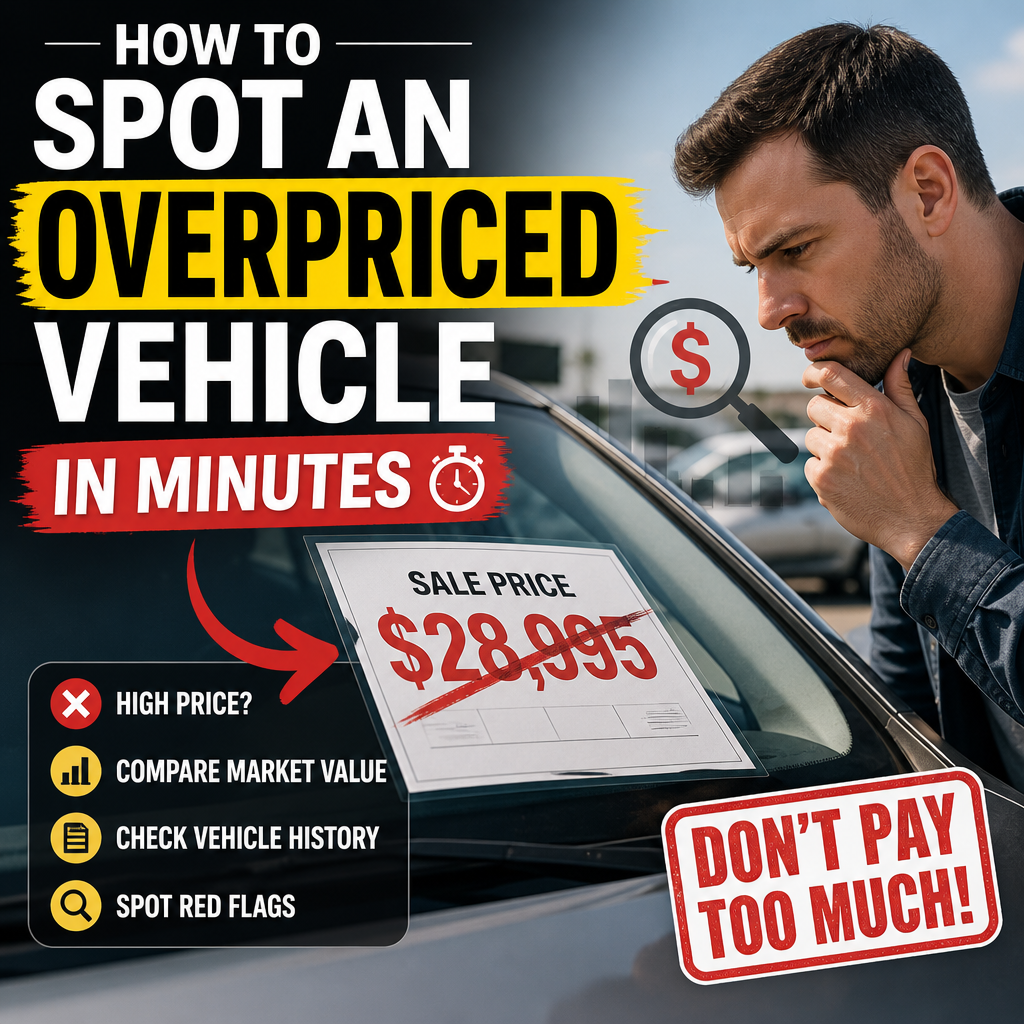
The fastest way to determine whether a vehicle is overpriced is to compare its asking price with current market values. Use reputable vehicle pricing tools to check the typical private-party, dealership, and trade-in prices for the same model.
Enter accurate details, including:

- Model year
- Trim level
- Mileage
- Drive type
- Optional features
- Overall condition
- Location
A vehicle priced slightly above average may be justified if it has unusually low mileage, excellent maintenance records, or desirable equipment. However, a large gap between the asking price and comparable listings is a warning sign.

Compare at least three to five similar vehicles rather than relying on a single listing. This gives you a more realistic idea of what buyers are currently paying.
Check the Mileage and Vehicle Age
Mileage is one of the most obvious factors affecting value, but it should always be considered alongside the vehicle’s age. A newer vehicle with unusually high mileage may have experienced more wear than its price suggests. Conversely, an older vehicle with very low mileage is not automatically a bargain.
Look for a reasonable relationship between age and mileage. Many drivers average approximately 10,000 to 15,000 miles per year, although usage varies widely. A five-year-old vehicle with 100,000 miles deserves closer inspection than one with 50,000 miles.
Also, verify that the mileage appears consistent with the service records and vehicle history report. Inconsistent readings, missing records, or signs of tampering may indicate that the vehicle is being presented as more valuable than it really is.
Examine the Vehicle History
A vehicle history report can reveal problems that are not visible during a quick walk-around. Before making an offer, check for:
- Previous accidents
- Salvage or rebuilt titles
- Flood or fire damage
- Multiple owners in a short period
- Open recalls
- Incomplete maintenance history
- Use as a rental, taxi, or fleet vehicle
An accident does not necessarily make a vehicle a poor purchase, but it can reduce its value. Repairs that affect the frame, suspension, airbags, or alignment are especially important. If the seller prices a previously damaged vehicle like a clean-history example, it may be overpriced.
Look Beyond Cosmetic Features
Fresh paint, polished tires, detailed interiors, and upgraded wheels can make a vehicle appear more valuable than it is. Cosmetic improvements may be appealing, but they do not compensate for expensive mechanical problems.
During your inspection, focus on essentials such as:
- Tire wear and tread depth
- Brake condition
- Engine leaks
- Warning lights
- Uneven panel gaps
- Rust underneath the vehicle
- Strange noises during startup or driving
- Air conditioning and electrical functions
Try to inspect the vehicle in daylight and with the engine cold. A warm engine may hide starting problems, while poor lighting can conceal paint mismatches, dents, or rust.
Pay Attention to Dealer Fees
Sometimes the vehicle’s advertised price appears competitive, but additional fees make the final cost unreasonable. Ask for a complete, itemized price that includes documentation fees, dealer add-ons, preparation charges, warranties, and other extras.
Common add-ons may include:
- Paint protection
- Fabric protection
- VIN etching
- Theft recovery systems
- Nitrogen-filled tires
- Extended service contracts
These products are often optional and may have little value compared with their cost. Focus on the total out-the-door price rather than the monthly payment. A low monthly payment can hide a long loan term, a high interest rate, or unnecessary extras.
Use the Test Drive as a Reality Check
A test drive can quickly reveal whether the asking price matches the vehicle’s condition. Notice how smoothly the engine starts, whether the transmission shifts cleanly, and if the steering or brakes feel unusual.
Drive on different types of roads if possible. Listen for rattles, vibrations, clunks, or wind noise. Test the vehicle at low and highway speeds, and pay attention to how it behaves during braking and turns.
For a used vehicle, an independent inspection is one of the best investments you can make. A mechanic may identify upcoming repairs that justify negotiating thousands off the price.
Know When to Walk Away
A seller who refuses an inspection, avoids providing a vehicle history report, or pressures you to buy immediately may be hiding problems. High-pressure tactics are not proof that a vehicle is overpriced, but they make it harder to evaluate the deal objectively.
Take a few minutes to compare prices, inspect the condition, review the history, and calculate the full purchase cost. If the numbers do not make sense, walking away is often the smartest financial decision. A good vehicle should offer fair value—not just an attractive sales pitch.