
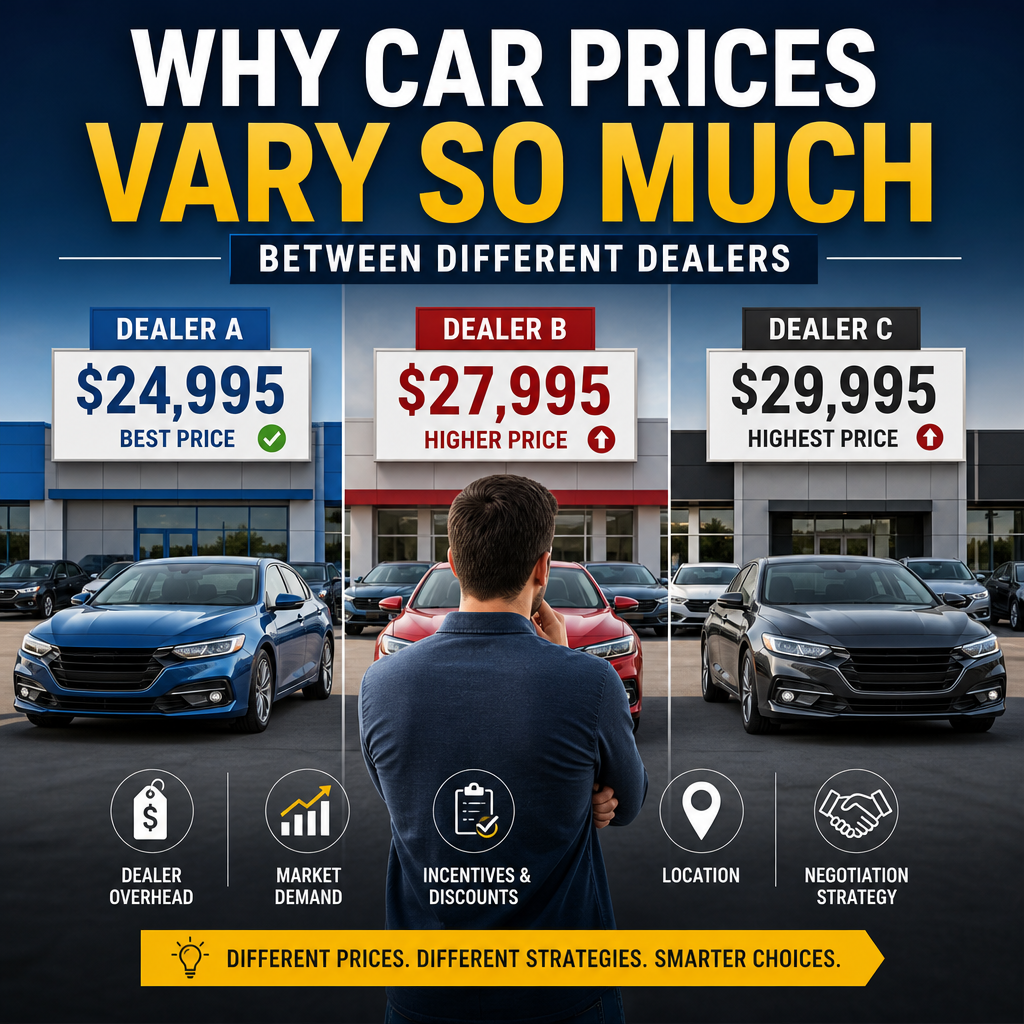
Why Car Prices Vary So Much Between Different Dealers
Why Car Prices Vary So Much Between Dealers
Shopping for a car can be confusing, especially when two dealers advertise what appears to be the same vehicle at very different prices. The model, trim level, color, and mileage may look identical, yet the final cost can differ by thousands of dollars.


These differences are rarely random. Dealer pricing is influenced by inventory, location, financing, fees, demand, and the dealership’s business strategy. Understanding these factors can help you compare offers more accurately and avoid paying more than necessary.
Dealer Inventory and Market Demand
One of the biggest reasons prices vary is inventory. A dealer with too many vehicles of a particular model may reduce prices to move stock quickly. Another dealer with limited inventory may keep prices higher because the vehicle is in demand.

Seasonal trends can also affect pricing. Convertibles may be more expensive in spring and summer, while four-wheel-drive vehicles may command higher prices during winter. New model releases can create discounts on outgoing models as dealers make room for newer inventory.

Local demand matters as well. A popular SUV may sell quickly in one region but sit on the lot in another. Dealers adjust prices based on what local customers are willing to pay.
Different Dealer Costs
Dealerships do not all have the same operating expenses. A dealer located in a major city may pay more for rent, labor, advertising, and facility maintenance than one in a smaller town. Those costs can be reflected in the vehicle’s price.
Franchise dealers, independent used-car dealers, and online retailers also operate under different business models. A franchise dealer may have larger facilities and manufacturer requirements, while an independent dealer may have lower overhead. However, the lower advertised price at an independent dealership does not always guarantee a lower final cost.
Manufacturer Incentives and Dealer Discounts
New-car pricing may be affected by manufacturer incentives, including rebates, special financing, loyalty offers, and regional promotions. These incentives are not always available to every buyer or at every dealership.
Some dealers pass manufacturer discounts directly to customers, while others advertise a lower base price and make up the difference through fees or add-ons. Dealer discounts may also depend on how badly a dealership needs to meet monthly or quarterly sales targets.
This is why it is important to ask whether the advertised price includes all eligible rebates. Some offers may require you to finance through a specific lender, trade in a vehicle, or qualify for a loyalty program.
Vehicle Condition and History
When comparing used cars, small differences in condition can have a major effect on price. Two vehicles with the same year, make, and model may have different mileage, maintenance records, accident histories, or numbers of previous owners.
A vehicle that has been carefully maintained may reasonably cost more than one with incomplete service records. Features such as upgraded technology, premium interiors, newer tires, and recent mechanical work can also increase value.
Before comparing prices, check the details carefully:
- Mileage and maintenance history
- Accident or damage reports
- Number of previous owners
- Warranty coverage
- Optional equipment and trim level
- Tire and brake condition
A cheaper vehicle may require expensive repairs soon after purchase, making it less affordable in the long run.
Fees and Add-Ons
The advertised vehicle price is not always the amount you will pay. Dealers may add documentation fees, preparation charges, registration costs, delivery fees, or electronic filing charges.
Optional products can increase the total further. These may include extended warranties, paint protection, fabric treatments, theft-recovery systems, and prepaid maintenance plans. Some add-ons provide useful protection, but others may be overpriced or unnecessary.
Ask each dealer for an itemized “out-the-door” price. This should include the vehicle price, dealer fees, taxes, registration, and any required charges. Comparing out-the-door prices gives you a much clearer picture than comparing monthly payments or headline prices alone.
Financing Can Change the Final Cost
A dealer offering a lower price may not provide the best financing terms. Interest rates, loan lengths, and required down payments can significantly affect the total amount paid.
A longer loan term may create a lower monthly payment but result in more interest over time. In some cases, a dealer may offer a discount only when you use its financing department, while a higher vehicle price may come with a lower promotional interest rate.
Get preapproved through a bank or credit union before visiting dealerships. This gives you a useful benchmark and makes it easier to evaluate the dealer’s financing offer separately from the vehicle price.
How to Compare Dealer Prices
To make a fair comparison, gather written quotes from several dealers and confirm that the vehicles have matching specifications. Focus on the full purchase cost rather than the monthly payment.
Compare:
- The vehicle’s exact trim and equipment
- Mileage and condition
- Dealer and documentation fees
- Taxes and registration costs
- Financing terms
- Warranties and optional add-ons
Car prices vary because dealers balance supply, demand, operating costs, incentives, and profit goals differently. By examining the complete deal and asking for transparent pricing, you can identify the genuinely better offer—not just the one with the most attractive advertisement.


