How Much Car Can You Really Afford? A Practical Guide
How Much Car Can You Really Afford?
Buying a car is exciting, but it can also place significant pressure on your budget. The price shown on the vehicle is only part of the cost. Monthly payments, insurance, fuel, maintenance, taxes, and unexpected repairs can all affect whether a car is truly affordable.


Understanding your full car-buying budget before visiting a dealership can help you make a confident decision and avoid financial stress.
Start With Your Monthly Budget
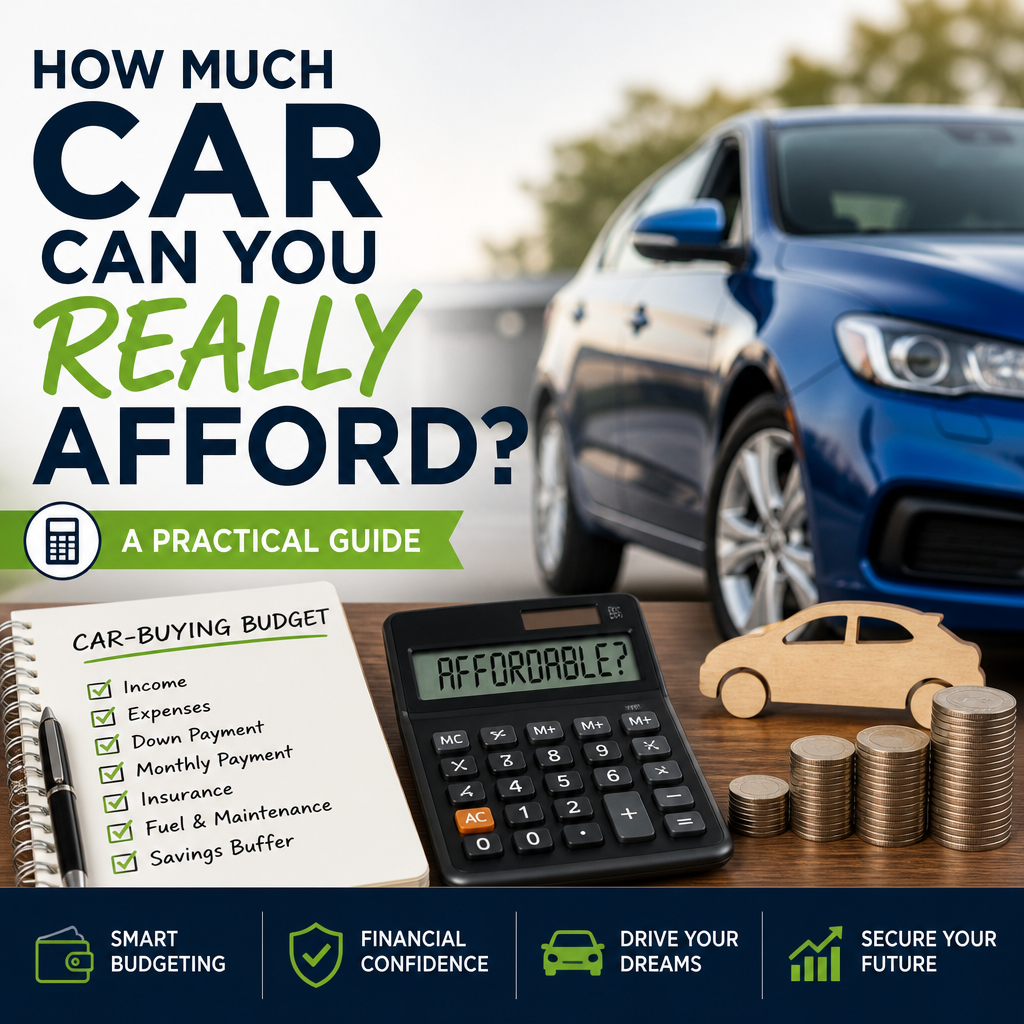
A common guideline is to keep total transportation costs below 15% to 20% of your monthly take-home pay. This includes more than your loan payment. Your calculation should account for:

- Car loan or lease payment
- Insurance premiums
- Fuel or charging costs
- Routine maintenance
- Registration and taxes
- Parking or tolls
- Unexpected repairs
For example, if your monthly take-home pay is $4,000, spending between $600 and $800 on transportation may be reasonable. However, that amount must cover every car-related expense—not just the payment.

If you already have substantial rent, student loans, credit card balances, or family expenses, choosing a lower percentage may be wiser.
Calculate the Real Cost of Ownership
Two vehicles with similar purchase prices can have very different ownership costs. A fuel-efficient compact car may cost far less to operate than a large SUV, even if their monthly payments are nearly identical.
Before buying, estimate the following expenses:
Insurance
Insurance costs vary based on your age, driving history, location, vehicle type, and coverage level. Sports cars, luxury vehicles, and some newer models can be more expensive to insure.
Request insurance quotes for specific vehicles before making a purchase. This can reveal whether a seemingly affordable car fits your budget.
Fuel and Charging
Consider how many miles you drive each month and the vehicle’s fuel economy. A car that gets 25 miles per gallon will cost considerably more to operate than one that gets 40 miles per gallon.
Electric vehicles may reduce fuel costs, but charging access, electricity rates, and battery-related expenses should also be considered.
Maintenance and Repairs
Every vehicle requires oil changes, tire replacements, brake service, and other routine maintenance. Older cars may have lower monthly payments but greater repair risks. Newer cars often cost more upfront but may offer warranties and more predictable expenses.
Research reliability ratings and average maintenance costs for any model you are considering.
Choose a Sensible Down Payment
A larger down payment reduces the amount you need to borrow, which lowers your monthly payment and total interest. Many buyers aim for at least 10% for a used vehicle and 20% for a new one, although the right amount depends on your savings and financial goals.
Avoid using every dollar of your savings for a down payment. It is important to keep an emergency fund for medical bills, job loss, home repairs, or unexpected vehicle expenses.
Also be cautious about rolling an existing car loan into a new one. This increases the amount borrowed and can leave you owing more than the vehicle is worth.
Consider the Loan Term Carefully
Longer loan terms can make monthly payments appear more affordable, but they usually increase the total cost of the vehicle. You may also build equity more slowly, creating a greater risk of being “upside down” on the loan.
A shorter loan term generally means higher monthly payments but less interest overall. Choose the shortest term that comfortably fits your budget without sacrificing emergency savings or other financial priorities.
Compare the annual percentage rate, total interest, and total amount repaid—not just the monthly payment.
Leave Room for Your Other Goals
A car should support your lifestyle, not prevent you from reaching important financial goals. Before committing to a purchase, make sure you can continue contributing to:
- An emergency fund
- Retirement accounts
- Home or education savings
- Debt repayment
- Travel and personal spending
A vehicle that requires cutting every other expense may be too expensive, even if a lender approves the loan.
Buy Based on Total Cost, Not Maximum Approval
Lenders determine how much they are willing to lend, but their limit is not necessarily what you can comfortably afford. Banks may not fully account for your savings goals, irregular expenses, or future changes in income.
Set your own maximum price before shopping, and treat it as a firm boundary. Comparing several models, getting insurance estimates, and reviewing the complete ownership cost can help you find a car that fits both your needs and your financial life.