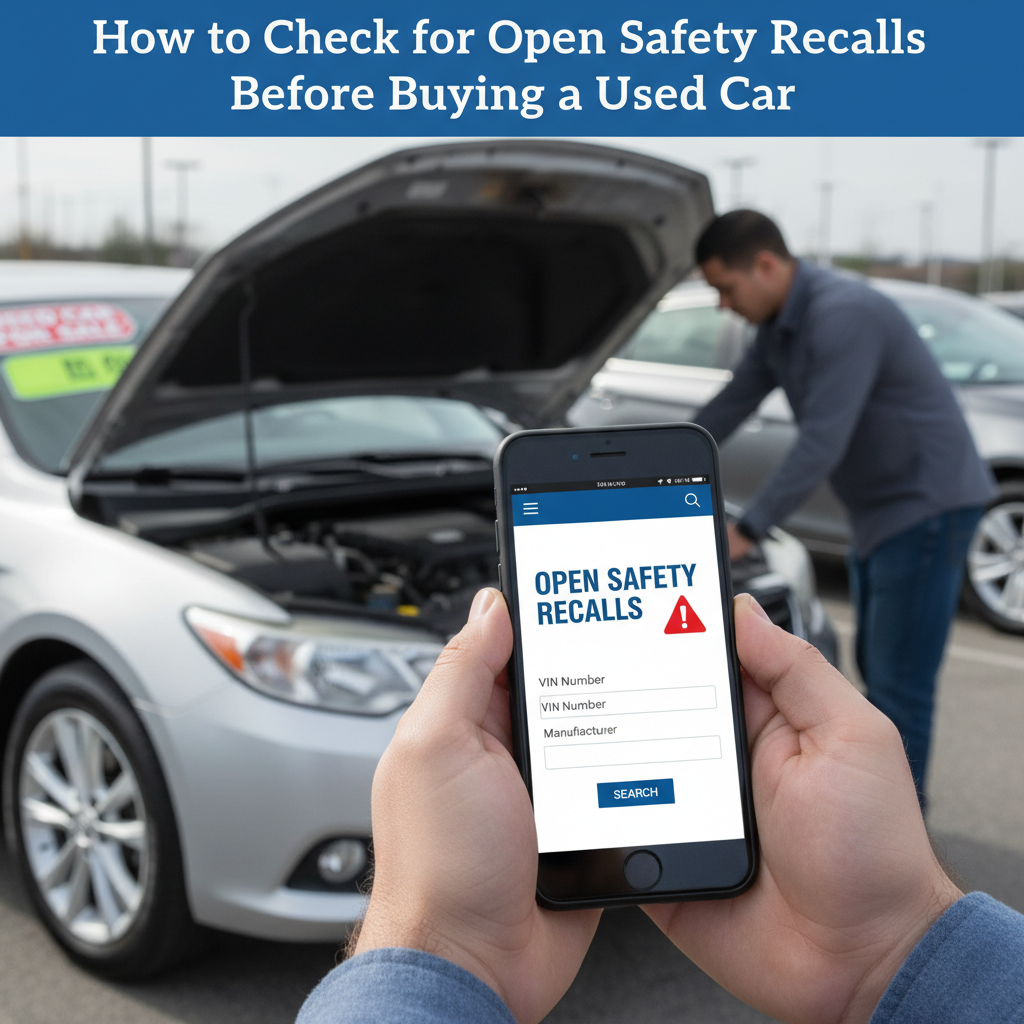
How to Check for Open Safety Recalls Before Buying a Used Car
Purchasing a pre-owned vehicle is an exciting milestone, whether you are hunting for your teenager’s first set of wheels or upgrading your daily commuter. Amidst the test drives, price negotiations, and mechanical inspections, it is easy to overlook a critical piece of the puzzle: vehicle safety. Millions of cars on the road today carry unresolved manufacturer defects known as open safety recalls. Before you sign on the dotted line and hand over your hard-earned money, understanding how to investigate a car’s recall history is essential for safeguarding your passengers and your investment.


Why Safety Recalls Matter
When a manufacturer or federal safety agency discovers a defect that poses an unreasonable risk to safety or fails to comply with federal motor vehicle safety standards, a recall is issued. These flaws can range from minor annoyances to catastrophic failures, including faulty ignition switches, malfunctioning airbags, fuel leaks, and sudden electrical shutdowns. While dealerships are legally prohibited from selling new cars with open recalls, laws regarding used car sales vary significantly by state. In many cases, private sellers and even independent dealerships have no legal obligation to fix a recall before offloading the vehicle.
The Hidden Dangers of Unfixed Defects
Driving a vehicle with an unresolved defect puts you, your passengers, and everyone else on the road at risk. Furthermore, ignoring a recall does not make it go away. If you purchase a car with an open recall, the financial and physical burden shifts entirely to you. Fortunately, getting these issues resolved usually costs nothing out of pocket.

How to Find and Use the VIN
The secret weapon in your recall investigation is the Vehicle Identification Number, commonly known as the VIN. This unique 17-character code acts as the social security number for an automobile, detailing its exact manufacturing specifications, factory options, and service history. You can find the VIN in several places on a car:

- On the driver side dashboard, visible through the lower corner of the windshield.
- On a sticker located on the driver side door jamb.
- On your vehicle insurance documents, title, or registration paperwork.
Step-by-Step Guide to Checking for Recalls
Once you have secured the VIN, running a recall check takes only a few minutes. Follow these simple steps to ensure the vehicle you want to buy is safe to drive.
1. Use Official Government Resources
The most reliable place to check for open safety campaigns is through official federal databases. In the United States, the National Highway Traffic Safety Administration provides a completely free online lookup tool. Simply navigate to their website and enter the 17-character VIN into the search bar. The system will instantly generate a report showing any uncompleted safety campaigns associated with that specific vehicle.
2. Check Manufacturer Websites
For an extra layer of verification, you can visit the official website of the vehicle’s manufacturer, such as Ford, Toyota, or Honda. Most brands feature their own recall lookup portals where you can plug in the VIN to see detailed descriptions of the defect and recommended remedies.
3. Review the Dealer Documentation
If you are purchasing from a licensed dealership, ask them to provide a printed copy of the recall status report. Reputable dealers will often perform these checks voluntarily or even have the service department complete the necessary repairs before putting the vehicle on the sales lot.
What to Do If You Find an Open Recall
Discovering that a prospective vehicle has an open recall should not necessarily kill the deal, but it does require strategic action. First, contact an authorized dealership for that brand and ask how quickly the remedy parts can be obtained and installed. By federal law, authorized manufacturers are required to fix safety-related recalls for free on vehicles up to a certain age—usually fifteen years old or newer. You can use the open recall as a bargaining chip to have the seller take care of the repair prior to purchase, or you can schedule an appointment to have it fixed immediately after the transaction is complete. Prioritizing safety ensures that your new-to-you ride brings peace of mind for miles to come.