
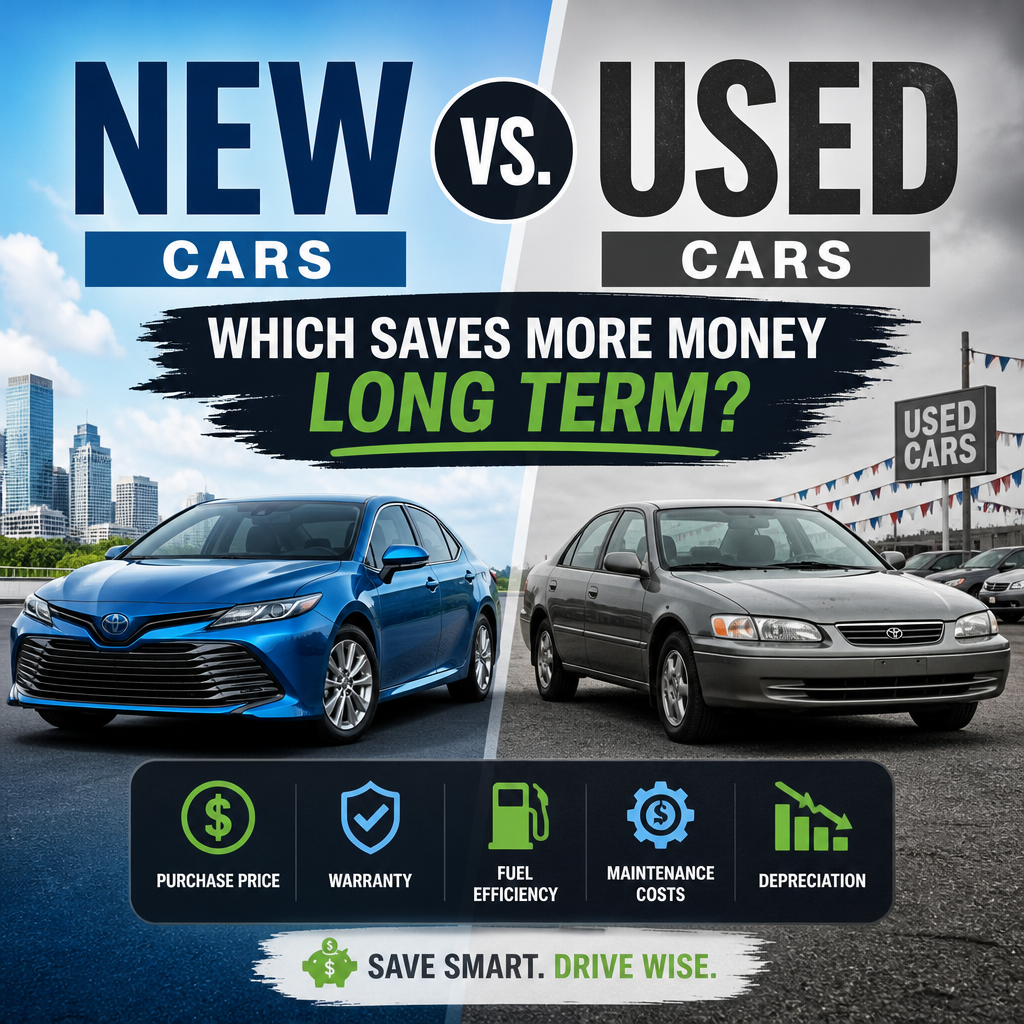
New vs. Used Cars: Which Saves More Money Long Term?
New vs Used Cars: Which Saves More Money Long Term?
When buying a vehicle, the decision between a new or used car often comes down to more than the sticker price. Insurance, maintenance, depreciation, financing, fuel economy, and reliability can all affect the total cost of ownership.


So, which option saves more money over the long term? In most cases, a used car costs less overall, but the right choice depends on the vehicle’s age, condition, and how long you plan to keep it.
The Upfront Cost Difference
The biggest financial advantage of buying used is the lower purchase price. New cars typically cost significantly more, while used vehicles may offer similar features at a much lower price.

A new car also loses value quickly. Many vehicles experience their steepest depreciation during the first few years of ownership. By purchasing a car that is two to four years old, you may avoid much of this initial drop in value.

Used cars can also require a smaller loan, which may mean:
- Lower monthly payments
- Less interest paid over the life of the loan
- A smaller down payment
- Reduced sales tax in some areas
However, used-car interest rates can sometimes be higher than rates for new vehicles, especially if the buyer has limited credit or purchases from a private seller.
Depreciation and Resale Value
Depreciation is one of the largest costs of vehicle ownership, even though it does not appear on a monthly bill. New cars generally lose value faster than used cars because buyers pay a premium for being the first owner.
For example, a new vehicle may lose a substantial portion of its value within the first three years. A used car that has already experienced this depreciation usually declines in value more slowly.
This does not mean every used car is a smart investment. Some models depreciate faster than others, while popular, reliable vehicles tend to retain their value. Researching resale values before buying can help you choose a car that costs less to own over time.
Maintenance and Repair Costs
New cars usually have an advantage when it comes to maintenance. They are less likely to need major repairs during the first few years, and many include a factory warranty that covers certain problems.
Used cars, particularly older vehicles, may need more frequent repairs. Common expenses can include:
- Brake replacement
- New tires
- Battery replacement
- Suspension repairs
- Timing belt service
- Fluid changes
Still, higher maintenance costs do not automatically make a used car more expensive. The purchase-price savings can outweigh repair expenses, especially when the vehicle has a strong reliability record and a documented service history.
A certified pre-owned vehicle can offer a middle ground. These cars are inspected by the manufacturer or dealership and may include limited warranty coverage, although they usually cost more than standard used vehicles.
Insurance, Registration, and Fuel Costs
Insurance is another area where used cars often save money. Since insurance payouts are based partly on the vehicle’s value, older cars may cost less to insure. New cars may also require comprehensive and collision coverage if they are financed.
Registration fees may be lower for used vehicles as well, depending on local laws. On the other hand, newer cars often include more fuel-efficient engines, hybrid systems, or electric powertrains. Lower fuel costs can make a new vehicle more affordable to operate, especially for drivers with long commutes.
It is important to compare expected fuel and insurance costs before making a decision. A cheaper car may not be the least expensive option if it uses significantly more fuel.
When Buying New May Make Sense
A new car may be worth the extra cost when you prioritize warranty protection, the latest safety technology, or predictable ownership expenses. New vehicles often include advanced driver-assistance features, improved fuel economy, and fewer immediate maintenance concerns.
Buying new can also make sense if you plan to keep the vehicle for a decade or longer. Over a long ownership period, the initial depreciation becomes less important, while reliability and warranty coverage may provide added value.
Look for manufacturer incentives, low-interest financing, and models with strong resale values to reduce the long-term cost.
When Buying Used Is the Better Choice
A used car is usually the more economical option for buyers focused on minimizing total spending. The best value often comes from a reliable vehicle that is a few years old, has moderate mileage, and includes complete maintenance records.
Before purchasing, consider:
- Getting an independent pre-purchase inspection
- Checking the vehicle history report
- Comparing insurance quotes
- Researching common repair costs
- Confirming the remaining warranty coverage
- Reviewing the car’s recall history
These steps can help prevent an inexpensive purchase from becoming an expensive problem.
The Bottom Line
For most drivers, a carefully selected used car saves more money long term because it costs less upfront and avoids the steepest period of depreciation. However, a new car can provide better warranty coverage, improved efficiency, and more predictable maintenance costs.
The smartest choice is not simply the newest or cheapest vehicle. Compare the total cost of ownership, including financing, insurance, fuel, maintenance, repairs, and resale value. A reliable used car purchased at the right price will often deliver the greatest savings, while a new car may be worthwhile for buyers who value convenience and long-term peace of mind.


