Bay Area Car Shopping: A Local Buyer’s Guide
Best Places to Shop for a Car in the Bay Area: A Local Buyer’s Guide
Shopping for a car in the Bay Area means balancing city traffic, steep hills, and sometimes long commutes with parking constraints and high ownership costs. This guide walks you through the main channels Bay Area buyers use—traditional dealerships, independent dealers, private-party sales, online marketplaces, and local automotive services—and the practical factors to compare when making a purchase.


Where Bay Area buyers look for cars
Traditional franchised dealerships
Franchised dealerships represent specific automakers and typically offer new vehicles, certified pre-owned (CPO) models, and factory-backed warranties. They often provide financing options, trade-in handling, and maintenance plans tied to the brand.
Independent dealers
Independent dealers usually focus on used cars from different makes and model years. They can be more flexible on price and may have smaller overhead, but warranties and service options vary widely. Expect to compare inspection policies and any dealer-provided warranties.

Private-party sales
Buying from an individual can yield lower prices, but it places more responsibility on the buyer. Private-party transactions often require a thorough pre-purchase inspection and careful attention to paperwork like the title transfer and smog certification when applicable.

Online automotive marketplaces
Local buyers increasingly use national and regional online marketplaces to find vehicles across counties. These platforms make search and price comparison easier and sometimes offer return windows, delivery options, or third-party inspection services.
Local automotive services and brokers
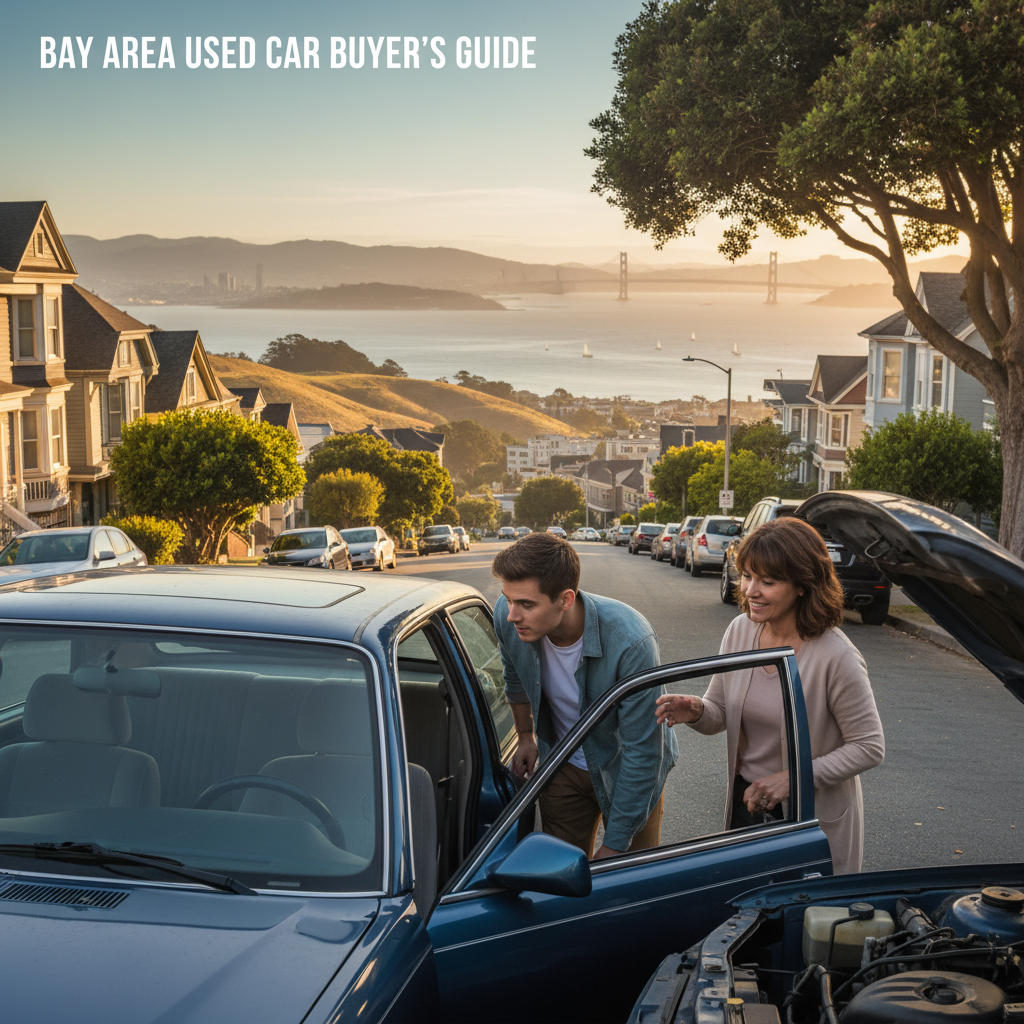
Local shops, independent mechanics, and vehicle brokers can help with pre-purchase inspections, negotiations, and paperwork. In the Bay Area, mobile mechanics who will inspect a car at the seller’s location are a particularly useful resource.
What to compare before you buy
When you’re evaluating a seller or channel, compare the items below to make an informed choice.
Vehicle condition
- Get a written history when possible and request a thorough inspection—preferably a pre-purchase inspection (PPI) by an independent mechanic.
- Test-drive in typical local conditions: hills, highway, and stop-and-go city traffic to uncover transmission, braking, and cooling system issues.
Pricing and total cost
- Compare listing prices across channels, but also factor in sales tax, registration, documentation fees, and any dealer preparation fees.
- Consider long-term ownership costs relevant to the Bay Area: fuel or electricity, insurance, regular maintenance, parking, and tolls when applicable.
Financing and pre-approval
Shop for financing from banks, credit unions, and dealer finance departments. Getting pre-approved gives you bargaining leverage and clarifies monthly payment expectations.
Trade-ins and separate transactions
If you plan to trade in your current vehicle, get independent quotes before accepting a dealer offer. Treat the trade-in and purchase as separate negotiations when possible to see the true value being offered.
Warranties and return policies
Understand what’s covered and for how long. CPO vehicles usually include longer coverage, while independent dealers and private sellers may offer limited or no warranty.
Fees and paperwork
Ask for a complete out-the-door price before agreeing to buy. Confirm who pays for smog certification, registration, and any local fees. In private sales, be sure the title is clear and transferred correctly.
Inspection and certification options
Use local mechanics or mobile inspection services to perform multi-point checks. If buying a CPO vehicle, review the certification checklist and know what independent checks remain desirable.
Location and logistics
Consider how far you’ll travel for pickup, and whether test drives will expose the car to the kinds of roads you drive daily. Proximity to reliable service shops and charging infrastructure (for EVs) is especially important in the Bay Area.
Practical buying tips for Bay Area shoppers
- Start online to build a short list, then inspect cars in person before committing.
- Factor in parking and insurance costs for the neighborhoods you frequent—urban rates are generally higher.
- If you’re considering an EV, check local charging options at home, work, and nearby public chargers.
- Bring a mechanic or arrange an independent PPI for any used vehicle, especially private-party purchases.
- Keep negotiations focused: separate price, financing, and trade-in conversations to get the clearest outcome.
Conclusion
Finding the right place to buy a car in the Bay Area comes down to balancing convenience, transparency, and total ownership cost. Each channel has advantages—manufacturer support at franchised dealerships, variety at independent dealers, potential savings in private-party deals, and broad search power through online marketplaces. Use inspections, ask for full pricing details, and consider local ownership realities like parking, maintenance access, and charging infrastructure before you sign.