San Francisco Car Market 2026: What Buyers Are Looking For
San Francisco Car Market 2026: What Buyers Are Looking For
In 2026, the San Francisco car market reflects the city’s dense, transit-oriented lifestyle and its push toward cleaner transportation. This article looks at the types of vehicles local buyers are searching for—electric vehicles (EVs), hybrids, reliable used cars, and compact commuter models—and explains how factors such as urban driving, charging access, fuel costs, vehicle size, ownership expenses, and local inventory shape buying decisions.


Why San Francisco’s market looks different
San Francisco buyers make vehicle choices filtered through short commute distances, narrow streets, steep hills, limited parking, and strong public transit options. Many residents consider cars as occasional-use tools rather than daily necessities, which changes the calculus on things like range, running costs, and vehicle footprint.
Electric vehicles: attractive but dependent on charging access
EVs remain on the shortlist for many Bay Area buyers because of their lower tailpipe emissions and the city’s climate goals. However, practical adoption depends heavily on where a household charges. Renters and residents of multifamily buildings who lack private garages often cite charging access as the primary barrier to switching.

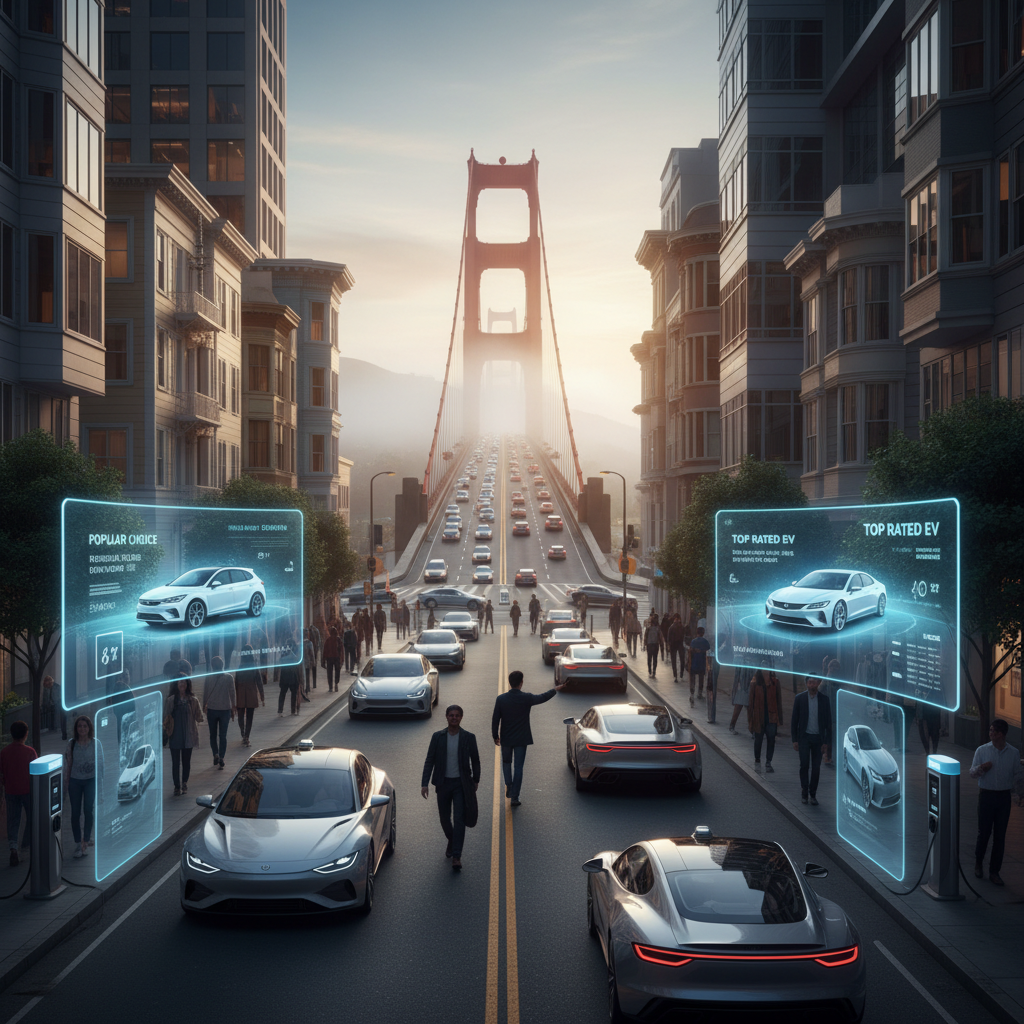
San Francisco has actively tested and expanded curbside and public charging options to address that gap, starting pilot curbside installations and moving toward a permit program to scale public curbside chargers—efforts that influence the confidence of aspiring EV buyers.

City targets to increase public chargers and reported counts of public chargers in recent planning documents are part of the context buyers weigh when deciding whether an EV will be convenient enough for day-to-day life. These infrastructure steps don’t guarantee immediate, universal access, but they make EV ownership increasingly practical for people without dedicated home charging.
What buyers should consider about EVs
- Home charging availability: the single biggest convenience factor.
- Access to curbside or public chargers if you park on-street or in shared lots.
- Typical urban driving patterns in SF—short distances with stop-and-go traffic—can favor electric drivetrains.
- Longer trips still require planning for fast chargers outside the city.
Hybrids: a practical compromise
Hybrids and plug-in hybrid electrics appeal to buyers who want improved fuel economy without depending entirely on public charging. For San Franciscans who commute intermittently by car or who value flexible refueling options, a hybrid is a pragmatic choice: it reduces fuel costs in city driving and avoids range anxiety while still offering easier ownership for those without reliable curbside charging.
Used vehicles: affordability and value
Used cars continue to attract buyers looking for lower up-front costs and slower depreciation. In a market where ownership can be occasional, a carefully chosen used vehicle often provides the best value. Buyers should prioritize low running costs, reliability, and suitability for urban parking when evaluating used models.
Practical tips for used-car buyers in San Francisco
- Favor compact or subcompact models for easier street parking and tighter garages.
- Check for trim or options that might complicate repairs (e.g., rare powertrains or discontinued parts).
- Factor in insurance, parking permits, and potential parking fees into total ownership costs.
Commuter cars: size, comfort, and ownership costs
For many San Francisco drivers the ideal commuter car is compact, maneuverable, and efficient. Buyers prioritize fuel economy (or efficiency in EV terms), low maintenance, and modest purchase prices. Small SUVs and crossovers that offer a higher seating position but remain narrow enough for street parking are often considered, but true preference varies by household needs.
How local inventory and ownership costs influence choices
Inventory availability at local dealerships and in the used market can nudge buyers toward particular models or powertrains. Rather than chase a rare spec, sensible buyers match available vehicles to practical needs: short urban trips, occasional freeway use, and the realities of city storage and permit systems.
Ownership cost checklist
- Estimate monthly parking permit fees or private garage rent.
- Include insurance differences for EVs, hybrids, and traditional gasoline cars.
- Consider maintenance patterns: EVs often have lower routine maintenance but may have higher costs for certain repairs or battery issues long-term.
Bottom line for buyers in 2026
The San Francisco car market in 2026 is shaped by infrastructure progress, urban form, and a growing—but still uneven—network of public chargers. EVs are increasingly viable for many residents, especially as curbside and public charging expand, while hybrids and sensible used vehicles remain strong choices for those prioritizing flexibility and lower upfront cost. Ultimately, pragmatic buyers will weigh charging access, parking realities, vehicle size, and total ownership costs when deciding which vehicle fits city life best.